What does Active Citizenship mean in daily work? Eight months after starting our campaign, we present some examples.
By Isis Eligbali, 08-09-2025

(Picture: Press Conference about situation of Yazidis is Erbil; Kirkik Now)
Eight months into the Active Citizenship project, where multiple state and non-state actors take an multi dimensional approach to critical challenges like environmental degradation, gender-based violence, all forms of violence in schools, limited access to healthcare, and a lack of information on women’s legal rights, we can report some success stories.
After the initial three months of training and network-building, our project partners have embraced the concept and made it their own. The past nine months have seen truly incredible engagement, with partners building a strong communication and knowledge-sharing base. Organizations have begun working together on common themes and increasing each other’s technical capacity. For example, one partner trained all the others on effective social media practices, including how to shoot short videos and take good smartphone photos to promote their work. In the last month, the active citizenship concept has truly started to resonate, becoming clear in the types of events and approaches being taken.
Citizen Roundtables
One example is the work of our partner, Human Network, which has been establishing Citizen Roundtables. These meetings bring together local doctors, health clinic administrators, local government health officials, and community members to share opinions on critical local health issues. One roundtable addressed tobacco consumption, exploring community-led approaches to minimize youth consumption and encourage active users to quit or reduce use.
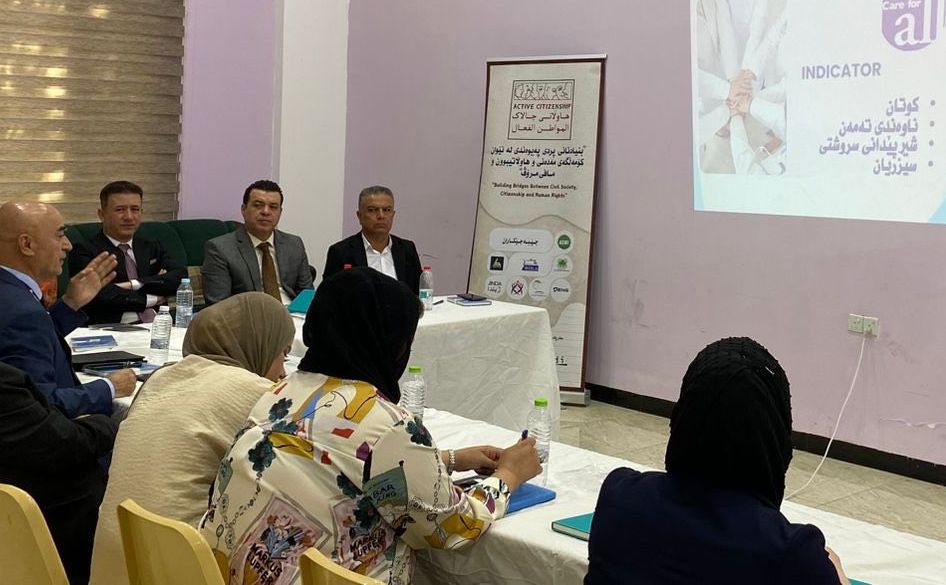
(Picture: Roundatble in Germian; HN)
Another focused on increasing access to healthcare for the elderly and vulnerable, bringing together multiple health clinics, local hospitals, the Garmian health officials, and another health NGO. This type of open, solution-oriented engagement between multiple non-state and state actors and local residents is a completely new approach, and our project has been instrumental in empowering this action for meaningful community change.
Documenting the situation of Esidi IDPs in Dohuk
Another example began with the detailed information gathering from Wadi Dohuk and Human Network teams working on environmental, gender based violence awareness and health awareness work in the IDP camps housing Eizidi refugees in the Dohuk area. The report led to a press conference in July 2, 2025 with all groups presenting the current situation since the exit of USAID from the area (and the global stage) and the domino effect this has had on multiple kinds of organisations that were providing medical services and others to residents of the camp. The report highlighted the lack of medical services, poor sanitation conditions and ongoing challenges with access to vaccines, as well as the poor conditions of the tents in the boiling heat of summer and the icy temperatures in the fast approaching winter.
The press conference put a spotlight on the situation and after the press conference VNGi organisation expressed their concern and their wish to continue working on this issue. Supported by the report prepared by Wadi Dohuk and Human Network as well as support from the Dutch Consulate, on September 3 VNGi were able to organise a follow up event “Voice of the Camps”.
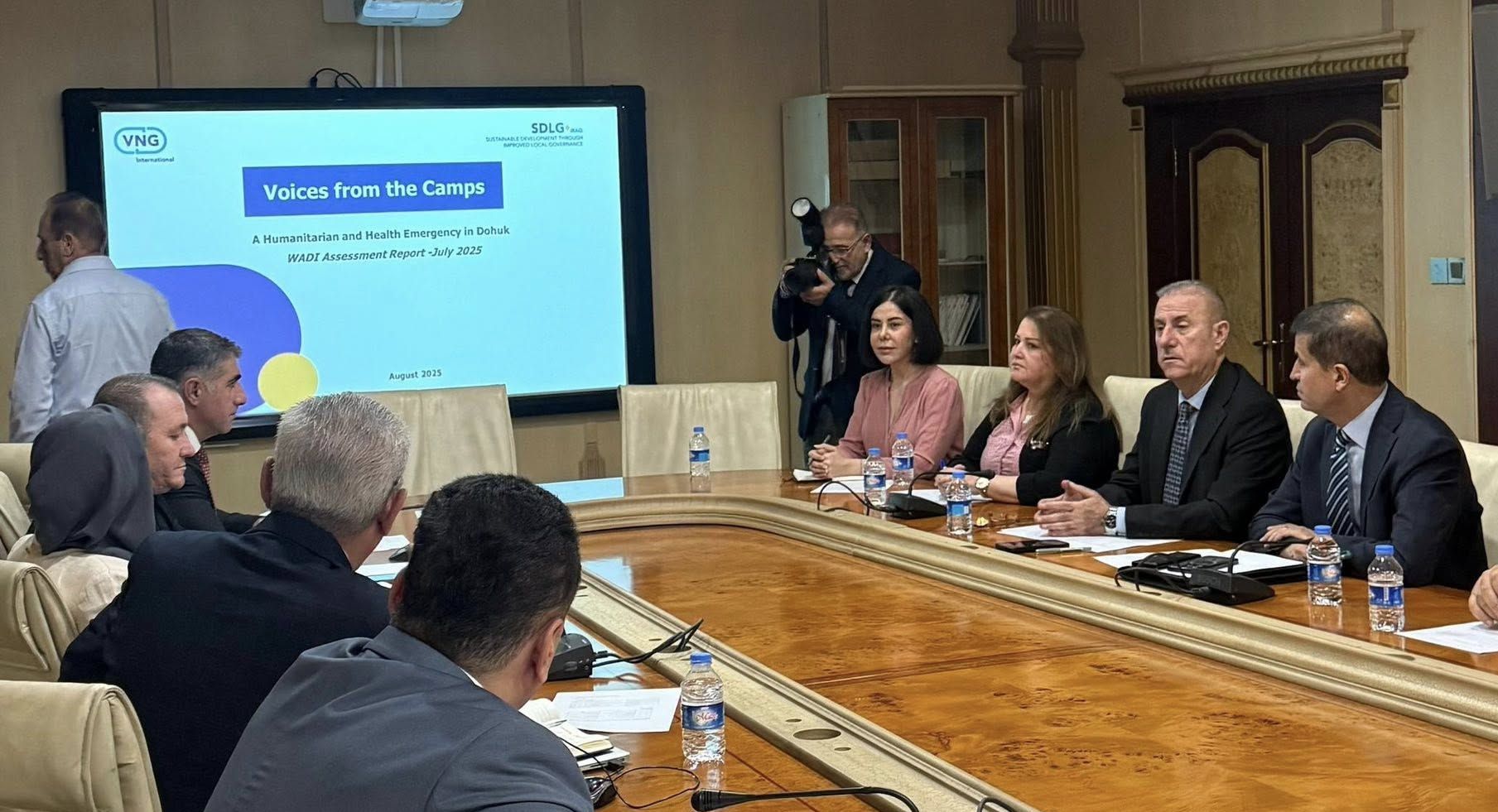
(Pictures: Meeting “Voices of the Camps”; Wadi e. V.)
The meeting brought together state and non-state actors together to highlight a number of questions and concerns about the role of government agencies in managing camps and providing the necessary support to ensure a decent life for IDPs. Representatives from the Department of Health, the Department of Water, the Department of Social Welfare, the Department of Public Relations in the Governorate, and a representative from the Department of Migration and Displacement, as well as Wadi and IOM, were also present. The meeting was also attended by the Deputy Governor of Dohuk, who moderated the meeting.
This multi-level, muli-month long cooperation between so many different actors engaging on the same issue in such an action oriented way is a direct result of the Active Citizenship ethos and is an excellent application of real life vs. theory and what the concepts look like in action. We will continue to work with our partners to create the framework for this type of work to build and to be successful as we go forward with this project.
 Wadi
Wadi 
