
By: Goran Zangana, Shokh Mohammad, Baxan Jamal, Azadeen M. Amin, Isis Elgibali, and Thomas von der Osten-Sacken, VIEWPOINT, Vol 27/2, 2025.
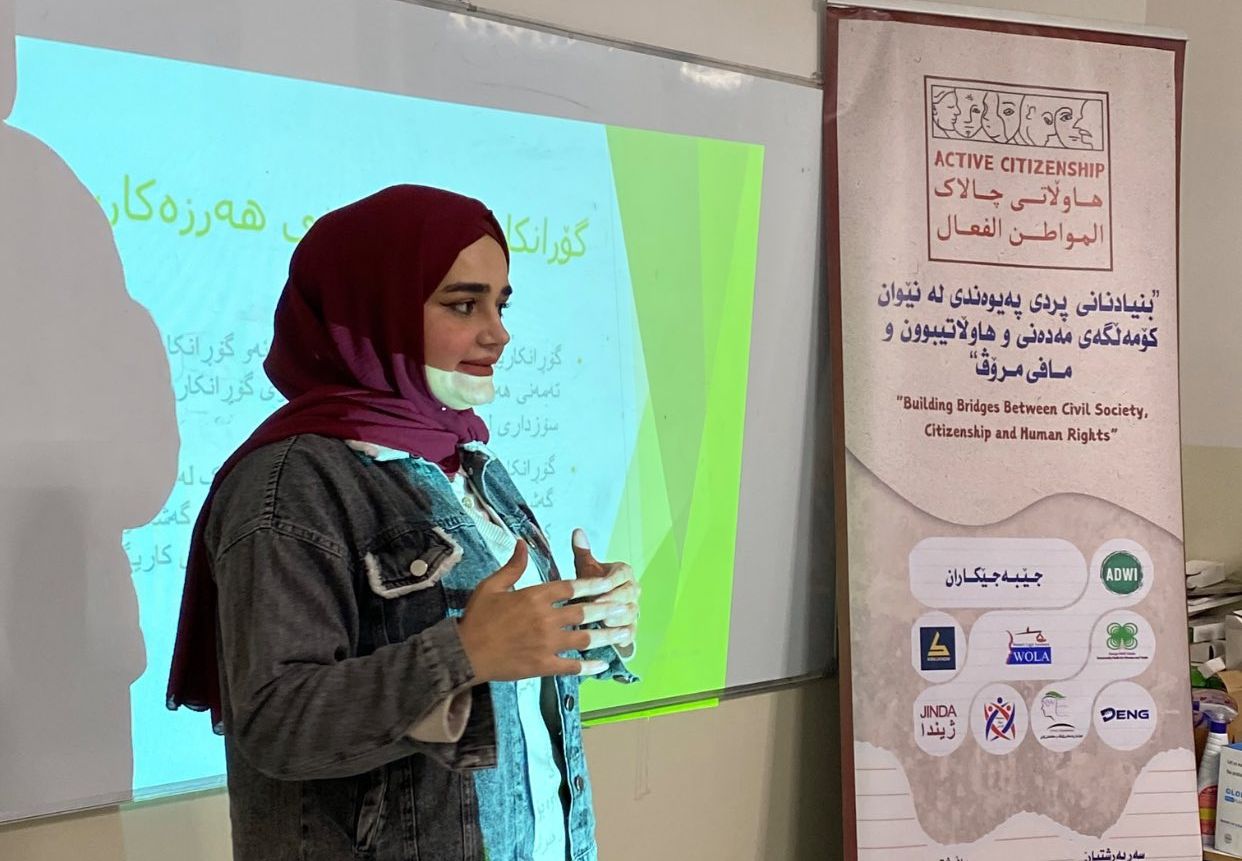
Seminar about Public Health in Iraqi-Kurdistan
In fragile and conflict-affected settings, traditional accountability structures are often weak or absent. The Kurdistan Region of Iraq (KRI) offers a stark illustration: electoral delays, parliamentary paralysis, and widespread corruption have eroded public trust and oversight. Within this vacuum, grassroots citizen committees have emerged as crucial actors in advancing the right to health and fostering people-centered accountability. Drawing on lived experience and field engagement, this viewpoint examines how these committees have created space for community dialogue, monitored service delivery, and leveraged local knowledge to promote transparency in health governance. We argue that despite political constraints and institutional fragility, citizen activism can form the basis of a resilient, human rights-based approach to health governance.
Accountability—understood as the mechanisms that require those in authority to explain and justify their actions and remedy failures—is a cornerstone of human rights.[1] However, in fragile and conflict-affected settings, the literature on citizen-led accountability remains limited. Much of the focus has been on external, donor-driven interventions, while endogenous, community-based forms have been overlooked due to their informality and slow evolution.[2] External support for accountability has largely prioritized technical advice to governments rather than the empowerment of citizens.[3]
The KRI’s history of political fragility underscores the need for such endogenous responses. Cycles of conflict—from early 20th-century Kurdish uprisings to the Iran-Iraq War, Anfal Campaign, and post-2003 political instability—have shaped its governance landscape.[4] Despite the KRI’s de facto autonomy after 1991, internal division between major parties and a contested independence referendum in 2017 have perpetuated political deadlock. Recent crises, including unpaid public salaries, energy shortages, and deadly protests, highlight widespread public frustration.[5] While over 6,000 nongovernmental organizations operate in the region, they remain largely constrained by party influence and corruption (hence our distinction between nongovernmental organizations and citizen committees as separate forms of civil society).[6] Press freedom is limited, and donor withdrawal—such as the termination of the US$75 million Primary Health Care Project run by the United States Agency for International Development (USAID)—has left a vacuum in community engagement.[7]
This viewpoint explores the emergence of citizen-led committees aimed at promoting health rights and accountability within this fragile governance context. The committees’ work aligns with article 12 of the International Covenant on Economic, Social and Cultural Rights and the United Nations’ AAAQ framework of availability, accessibility, acceptability, and quality.[8] Their activities demonstrate how informal citizen structures can uphold human rights-based principles even where formal accountability has collapsed.
Health governance in Kurdistan
Modern public health in Iraq was institutionalized under British colonial influence, embedding physicians as both healers and political actors within governance structures.[9] Subsequent decades, particularly under the Ba’ath regime, prioritized tertiary hospital expansion at the expense of primary care, creating an imbalanced system.[10] The 1991 Gulf War and sanctions exposed the fragility of this model, leading to widespread service collapse.[11]
Post-2003 reforms driven by liberalization and market-oriented policies deepened inequities.[12] Profit incentives within public facilities transformed health from a human right into a commodity. Political parties gained control over pharmaceutical procurement and health contracts, eroding regulatory oversight.[13] Conventional accountability mechanisms—such as parliamentary scrutiny, media oversight, and civil monitoring—failed to prevent corruption, while the public sector’s neglect of primary care entrenched inequality. Restoring trust therefore requires reimagining accountability through citizen-led participation rooted in transparency and ethics.
Citizen-led accountability initiatives
Since 2024, the Human Network for Health and Humanitarian Affairs (HUMAN), an independent nonprofit, has initiated a grassroots accountability project across the KRI in partnership with WADI. Supported with Dutch funding, the project promotes citizen participation and monitoring to rebuild trust in public health governance. While still informal, this effort represents an early step toward participatory accountability mechanisms.
Citizen committees under this initiative include medical professionals, civil society actors, and representatives of vulnerable groups. They collect community input, engage with local institutions, and formulate recommendations addressing service gaps, such as staff shortages and lack of mental health provision. Operating voluntarily, these committees act as advisory and advocacy bodies promoting transparency, inclusion, and accountability.
Their influence extends to educational and environmental initiatives. In refugee and displacement settings such as Yazidi camps in Duhok, the committees have preserved access to education and psychosocial support following government funding cuts. The “Playbus” and “No to Violence” campaigns introduced trauma-informed learning and environmental health practices, improving student well-being and civic participation. Between September and December 2024, HUMAN conducted 10 public health seminars addressing hygiene, early disease detection, drug prevention, and the right to health, each reaching up to 50 participants. Youth engagement was central, linking awareness with social responsibility.
 Wadi
Wadi 
