
We helped our partners from ADWI to organize a panel discussion addressing the growing situation of drug use and drug dealing in the Garmyan region. This happened in collaboration with Garmyan General Security and other law enforcement bodies.
By Shatoo Kamaran, 30.12.2025
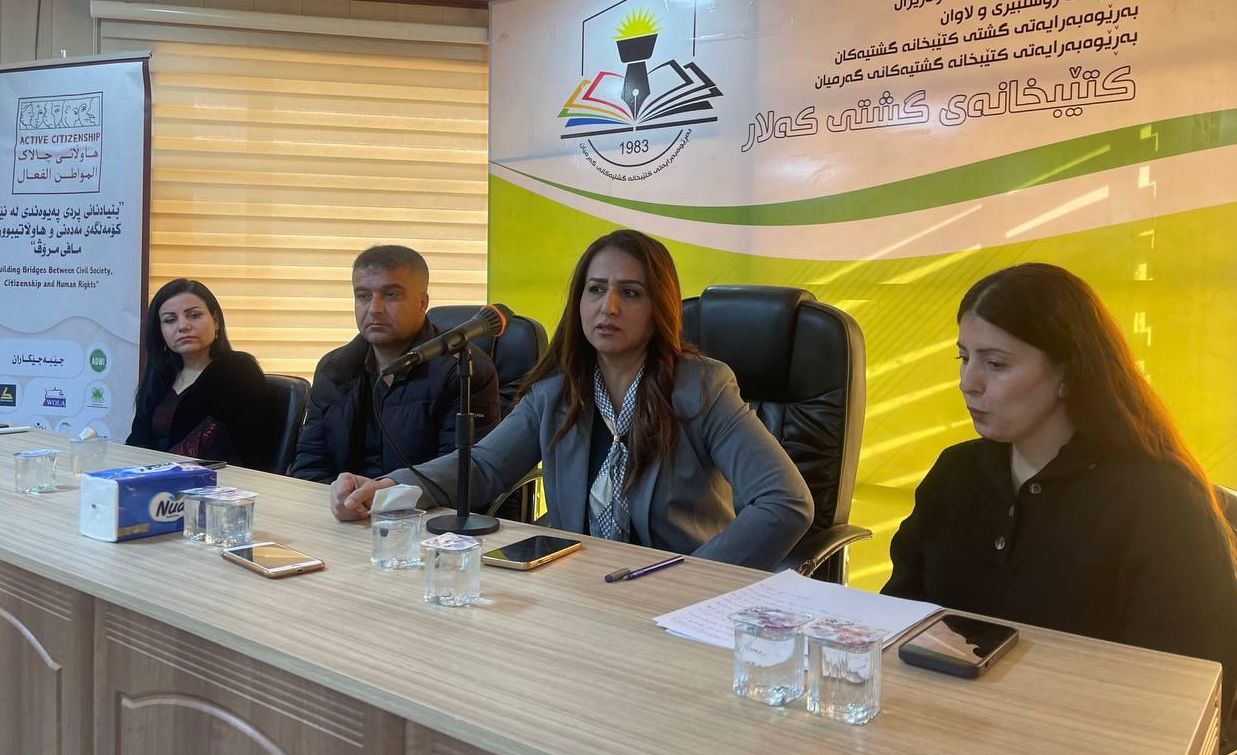
(Picture: The panelists, Source ADWI)
The event was attended by representatives from multiple police departments, including the Garmyan Police Station, Civil Police, Parwezkhan Checkpoint Police, Khanaqin Police, Kifri Police, Kalar Hospital Police, Qoratu Police, Maidan Police, Garmyan Passport Police, and the Fighting Crime Police Department. The strong participation of security institutions reflected the seriousness of the issue and the shared concern regarding its impact on society.
Several media outlets covered the panel discussion, including KirkukNow, Kobas Media, Ayinda, Deng Radio, Kurdistan TV, Galikurdistan, KAR Media, and 964 Media, contributing to broader public awareness of the issue.
The panel featured three speakers with diverse professional backgrounds:
Parwin, a judge in the Garmyan region, discussed the legal procedures related to drug use and drug dealing. She highlighted the current situation in Garmyan, the types of substances being used and traded, and the legal challenges authorities face in addressing addiction and trafficking cases.
Dilshad Anwar, a journalist, shared findings from his investigative work on drug use in Garmyan. He emphasized that the situation is rapidly escalating and warned that Garmyan is becoming a hotspot for drug dealing. He cited a major case in which 40 kilograms of drugs were seized by the police, illustrating the scale of drug trafficking in the region.
Nazdar Qudrat, a psychological health expert, spoke about the underlying reasons why people, particularly young adults, turn to drugs. She stressed the urgent need for specialized rehabilitation centers, noting that addiction should be treated as a health issue requiring professional care rather than only a security response.
Audience Engagement and Key Messages
The discussion concluded with an active Q&A session. One police officer urged ADWI not to let this panel be a one-time activity, emphasizing that drug-related issues require sustained efforts, follow-up actions, and long-term engagement. He noted that many organizations conduct a single activity and then disengage, despite the severity of the problem.


Another participant called on security forces, civil society organizations, communities, and especially the media to give greater attention to this issue. He stressed that drug abuse affects everyone directly or indirectly and highlighted that protecting the next generation and children should be a shared priority, as no family is immune to this risk.
A police officer questioned why journalists do not work more intensively on drug-related issues to raise awareness and support efforts by Asayish and the police. In response, Dilshad Anwar explained that the lack of independent national media and political influence over media outlets limits their ability to address issues that do not serve political interests.
ADWI’s Commitment
ADWI emphasizes that individuals struggling with drug addiction are, first and foremost, citizens and members of our society. They are people in need of support, care, and appropriate services, not exclusion or stigma. Drug use should be understood primarily as a social and public health issue, rather than addressed solely through a criminal lens.
ADWI believes that responding effectively to drug addiction requires recognizing people who use drugs as individuals who need help, rehabilitation, and professional treatment. Viewing addiction only as a crime risk deepens social marginalization and discourages affected individuals from seeking assistance. Instead, a humane and inclusive approach is essential, one that balances law enforcement efforts with prevention, treatment, and reintegration.
Addressing drug use in Garmyan is a shared responsibility. Government institutions, security forces, health services, civil society organizations, families, media, and communities all have a role to play in ensuring that people affected by addiction can access support and recovery services. This includes advocating for the establishment of specialized rehabilitation centers and strengthening psychosocial and community-based interventions.
 Wadi
Wadi 
