Iraq and Iraqi Kurdistan are heavily impacted by the ongoing war. Our colleague Shokh Mohammed wrote this report about what this means for the population and our ongoing projects and programs.
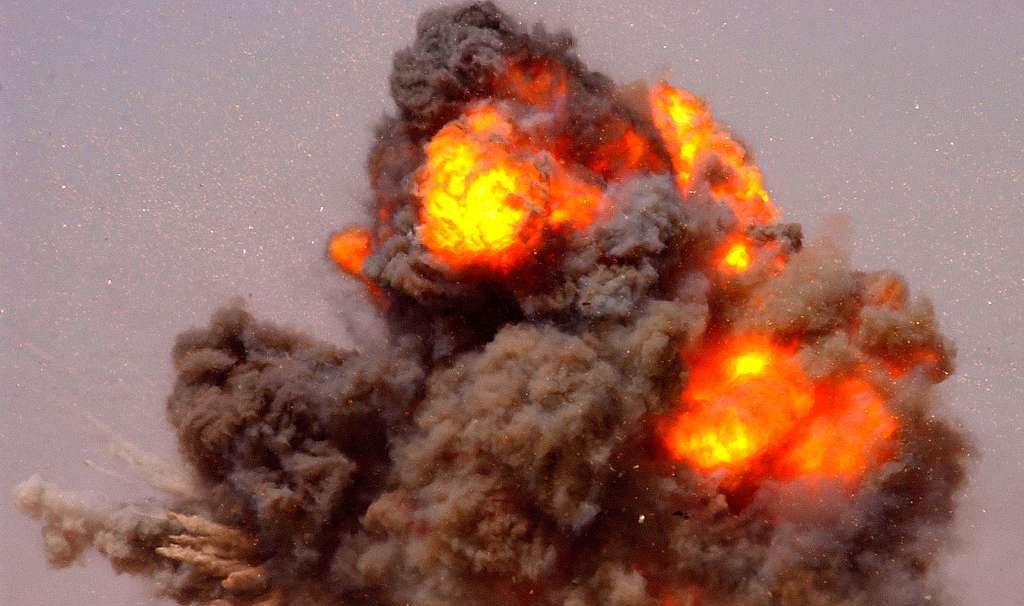
(Picture: Explosion in Iraq, Source: Picryl, CC License)
Since the onset of the US-Iran conflict on February 28, 2026, it has now been 32 days of escalating tensions, leaving the people of Iraq and the Kurdistan Region caught in the crossfire. Every night, the skies over Iraq and Kurdistan are filled with the sounds of drone strikes and missile attacks, primarily targeting military bases, US consulates, and forces in the region.
In the Kurdistan Region, Erbil has been hit by 250 drones and missiles, while Sulaymaniyah has faced 41 attacks and around 46 civilian homes have been damaged due to the drone debris falling in the Kurdistan region. These strikes have claimed the lives of six Peshmerga fighters, leaving dozens more injured. Civilians have also been affected, with several reported injuries and significant damage to homes and businesses. Several drones fallen close even to our main office that caused so far only damages to some houses and buildings.
Massive sense of fear
The ongoing insecurity has created a massive sense of fear and instability, deeply impacting the safety and well-being of the population. This environment has led to a virtual standstill of most social activities, and a major disruption of the operations of civil society organizations (CSOs) and NGOs. While many have shifted to remote work, some have had to cease operations entirely.
The broader consequences have been felt across various sectors. Shortages of key resources like gas and electricity are widespread, with many areas facing long periods of power cuts. Food prices have surged, and there is an increasing scarcity of bread and bakery products in the market. Furthermore, the delay in civil servant salary payments has exacerbated the financial strain on Iraqi families, adding to the growing sense of uncertainty.
The ongoing gas shortages, frequent power outages, and the heavy reliance on private or neighborhood generators have placed a significant financial strain on the population. Many families are facing high costs for basic services that are often unreliable or unavailable. These challenges are even more pronounced in the refugee and internally displaced persons (IDP) camps in Duhok, where our teams have reported much steeper increases in the prices of essential goods, such as food and fuel. The situation in these camps continues to worsen, adding to the already precarious living conditions of displaced families.
Adapting our field work


(Pictures: Despite the war some activities are still continuing)
In response to the evolving situation, our field operations have been adapted, with teams making decisions based on local conditions and safety considerations. A large portion of our services has moved online, with a particular focus on counseling, stress management, and mental health support. However, we also recognize the critical need to maintain a sense of normalcy for the communities. As such, we continue to implement certain activities, particularly those involving children on a limited, small-scale basis, ensuring that all safety protocols are followed. Similarly, a strong emphasis is being placed on the mental health and well-being of our staff, with particular attention given to ensuring their safety during this difficult period.
At present, no significant cross-border movement has been observed. However, there is an ongoing concern that developments in the region, particularly any agreement involving the Iranian government, could lead to retaliatory actions in Kurdish areas of Iran, potentially triggering new waves of displacement. In response, our local partners are closely monitoring the situation and remain prepared to respond should conditions deteriorate.
 Wadi
Wadi 
