Wadi is supporting a new project where community-led initiatives are attempting an intersectional approach to address critical challenges such as environmental degradation, gender-based violence, all forms of violence in schools, lack of access to healthcare, and limited information on and access to women’s legal rights.
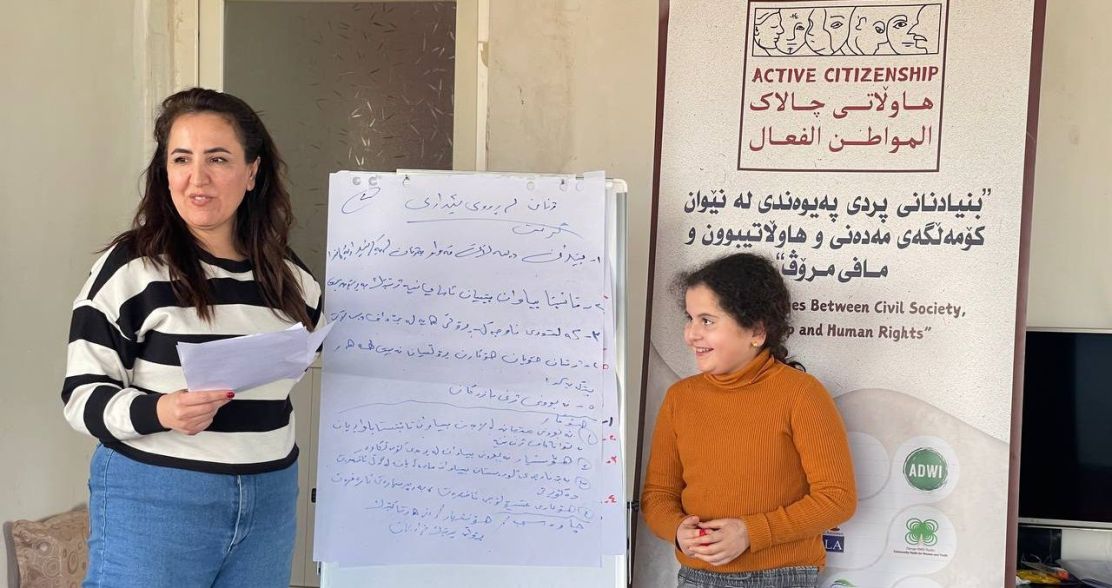
We are supporting the collaboration between diverse stakeholders, including local organizations, community members, activists and local municipalities to find their own ways towards solutions to their communities problems. At the heart of the project is the ‘Active Citizenship’ concept that fosters participatory processed at the grassroots level.
Wadi has a 30-year history of working with people on an equal basis, providing support and building their technical knowledge. Our approach has always emphasized long-term engagement, grassroots organizing, and a citizen-based framework, fostering strong, independent networks. This approach underpins the vision of this current project, which aims to bring together diverse actors – CSOs, NGOs, media organizations, schools, universities, local hospitals, and government entities – to address critical issues, through a lens of citizenship.
This approach aligns with Wadi’s long-term vision, where teams and partners work together with community members to define and address serious issues within their region. Active citizenship is central to this approach, recognizing that Wadi’s role is not to “save” people, but to empower them through mutual respect, active listening, and engagement with diverse perspectives.
This two-year project will explore innovative approaches to foster a new understanding of active citizenship. Through participatory processes at the grassroots level, it will bring together non-state and state actors, and multiple stakeholders to create meaningful projects that address key issues such as environment, public health, education, gender-based violence (GBV), and media. sharing, best practice exchange, and collaborative decision-making.
Wadi has been working on “Active Citizenship,” a grassroots, citizen-led, and intersectional approach to projects. In 2024, we expanded this approach to include many local partner organizations and the Consulate of the Kingdom of the Netherlands in Erbil is an ongoing supporter of this project.


The project is structured around several main themes, each encompassing one or more projects that may be self-contained or evolve into multi-year campaigns. The first year will focus on an initial phase, exploring new approaches with stakeholders, establishing non-hierarchical communication structures, and creating a framework for the responsive design of partner-suggested activities. The second year will build upon the lessons learned, media resonance, and network building, focusing on highlighting the intersectional approach of the project pillars. The specific activities, timeline, and partner involvement for the second year will be determined during the final quarter of the first year, recognizing the dynamic nature of the local context and the importance of timely and relevant project implementation.
Our long-term goal is to cultivate a new understanding of active citizenship, where non-state actors act as agents of change.
Wadi will act as a knowledge-sharing hub, providing training, technical support, and guidance to all implementing partners. As the project progresses, the role of Wadi will evolve, empowering stakeholders to increase their knowledge, capacity, and experience. Regular “round table meetings” will facilitate interconnectivity between partners and across project pillars, enabling knowledge sharing, best practice exchange, and collaborative decision-making.
Our long-term goal is to cultivate a new understanding of active citizenship, where non-state actors act as agents of change. This involves bringing together diverse facets of society, such as civil society organizations, local municipalities, university students, schools, religious communities, different ethnic groups, local journalists, citizen journalists, healthcare practitioners, and activists. Together, we will create actionable modules of activities and projects centered on active citizenship, addressing interconnected issues such as environment, public health, student engagement with citizenship, gender-based violence, and citizen journalism.
This is a critical time in the Kurdistan Region of Iraq (KRG), with recent elections energizing people and increasing social engagement on issues impacting their daily lives. However, there is widespread frustration and a lack of trust in the government and large international organizations. This transitional period presents an excellent opportunity to explore a different approach, fostering new relationships and understandings of the interaction between people and their government – not as subjects, but as citizens.


In the second half of 2024 the initial stage of this project started in multiple locations, and on multiple topics. In Halabja, the activities started focusing on environmental issues. Outdoor town halls introduce project concepts through interactive games, followed by discussions and presentations by local youth on their perspectives on environmental problems within their communities. Youth are divided into teams, presenting solutions to the environmental challenges identified by other teams. This fosters critical thinking, encourages diverse perspectives, and builds a deeper understanding of how to address complex issues from multiple angles. These activities will continue to build upon these concepts and incorporate solutions suggested by the youth teams into ongoing environmental initiatives.
In the lead-up to the Kurdish parliamentary elections in October 2024, partners KirkukNow and ADWI collaborated to create “Your First Vote,” a guide for new voters, explaining the electoral process and empowering them to make informed decisions. This video exemplifies new approaches, new media, collaboration, network building, and youth engagement in democratic processes.
In Dohuk, Wadi initiated this approach in June, prior to International Children’s Day. The Iraqi government announced the cessation of funding for IDP camps housing thousands of Yazidis, urging their return to Sinjar despite ongoing security concerns. The Sinjar massacre (August 2014) and following genocide resulted in so much displacement, with many children orphaned and deprived of education. Today, hundreds of thousands of Yazidis still reside in IDP camps, with many younger generations having never known life outside these camps. A part of this project is supporting self-organization of Yazidis to facilitate working together to find solutions to the different problems of life in the camps.
The Project also prioritizes strengthening inter-organizational networks and enhancing technical skills. Wadi provides training in organizational skills such as documentation, reporting, financial management, and budget planning and reporting. We encourage network building and communication among partners, facilitating knowledge sharing and fostering organizational growth and independence. Many of these partners have emerged from previous Wadi projects, and we will continue to support their development as independent NGOs.
All partners are actively engaged in their respective roles, ranging from election coverage by journalists to working with schools and youth to promote democratic processes and civic engagement. They are also involved in building recycling networks and fostering environmental engagement through self-organization within schools, universities, and IDP/refugee camps. Planning for 2025 includes reviewing feedback from local participants, coordinating with network partners, and voting on training topics for the next six months, injecting new energy, vision, and a high level of engagement into the project.


A more in-depth look at the different pillars of the project:
Environment: People, especially young people, are increasingly aware of how plastic waste, un-recycled trash, and trash burning negatively impact their lives. Social media has played a crucial role in connecting them to global movements and raising awareness. Wadi supports environmental action by fostering stronger connections between communities, local governments, schools, universities, activists, volunteers, and non-profit organizations.
The project partners, in collaboration with local communities and activists, have proposed projects such as establishing single-use recycling systems, conducting workshops on water conservation, and organizing community clean-up initiatives with students and volunteers. Framing environmental engagement as a form of active citizenship has resonated strongly with both partners and community members. This approach offers valuable opportunities for collaboration between local governments and project partners.
For instance, the idea of enhancing this pillar’s impact by linking it to other project areas, such as education, media, and addressing gender-based violence, has been particularly well-received. This integrated approach provides a tangible and visible way for community members to contribute, engage with local authorities, build new relationships, and create local networks.
Active citizenship is a fundamental principle of this project, crucial for rebuilding social trust and fostering genuine participatory democracy. This kind of engagement is highly rewarding, and its positive effects are often quickly observable – for example, a previously littered park transformed into a clean and green space.
By supporting these activities, we aim to create a framework and a space for collaboration with local municipalities, while also establishing mechanisms for accountability. We plan to document successful projects and develop practical, adaptable best-practice guides for other communities. The environmental component of this project focuses on communities and villages in Halabja, Duhok, and Kifri.
Schools:
The Schools pillar of this project was adapted to reflect the ongoing school strikes in the Kurdistan region, which have made school schedules unpredictable. If these disruptions continue, our partner, ADWI, will adapt their activities to nearby community spaces. The long-term impact of the strike remains uncertain.
This situation highlights the need for engaging teaching methods beyond traditional lectures. To address this, the project will integrate visual aids and interactive materials. Furthermore, the Schools pillar will intersect with other project areas, exploring topics like non-violent conflict resolution alongside children’s rights, play-based learning, health and wellness, gender-based violence, and cyberbullying. Roundtable meetings between partners will facilitate knowledge sharing and expertise exchange.
In Kurdistan, a deeply ingrained belief views children as their families’ “property.” This is reinforced by rigid school systems where fear and corporal punishment are used to enforce authority. Children’s voices are suppressed, and expressing opinions or asking questions is often discouraged or even punished. This teacher-student dynamic, characterized by authoritarianism and a lack of accountability for teachers, has remained largely unchanged.
Parents typically entrust teachers with complete authority, expecting their children to unquestioningly obey. This system fails to prepare children for active and engaged citizenship. Human Rights Watch’s 2020 report on corporal punishment in the Middle East further emphasizes the devastating impact of this practice on children, youth, and society.
A recent legal change in Kurdistan now allows and encourages schools to collaborate with NGOs and CSOs. This significant development, which was considered during the project’s initial design in January 2024, provides an excellent opportunity to engage youth in concepts like active citizenship, democracy, and self-organization.
Wadi has a strong track record of promoting active engagement in schools. We’ve worked closely with schools, students, parents, and educational authorities to create spaces for open dialogue. Our “No to Violence” campaign, launched in 2017, has involved advocating against corporal punishment and bullying, training teachers and parents in non-violent conflict resolution, and encouraging schools to adopt more inclusive approaches. The target group for this project includes schools and educational facilities serving children in the Ranya, Erbil, and Garmyan regions
GBV and FGM:
Gender-based violence (GBV) and female genital mutilation (FGM) are rooted in unfair gender norms and traditions that give men more power over women. Both practices violate women’s fundamental rights to control their own bodies, live safely, and be free from harm.
Recent political developments in Baghdad, Iraq, including the passing of a new law which has lowered the marriage age from 18 to 9, effectively legalizing child marriage and also give religious authorities more control over family matters, have sparked worry in the Kurdish region. Here too, there are occasional efforts to weaken the law banning FGM.
This is a critical time to address GBV and child marriage. Our project activities aim to build momentum and public awareness. Our partner, ADWI, plans to strengthen the connections between legal rights and public health issues related to GBV and FGM.
FGM is a form of GBV that reflects a desire to control women’s bodies. GBV in Kurdistan includes issues like child marriage, forced marriage, honor killings, domestic violence, and limited access to education and healthcare. Wadi has been working to end FGM since 2004, when our mobile health teams first documented the widespread practice in northern Iraq. We understand the need for a comprehensive approach that tackles GBV and gender inequality across society. Our project takes a “citizenship-based approach” with the ultimate goal of achieving equal rights for women. We will build connections between all project areas (environment, schools, media, etc.) to amplify the message that women are people, not property.
Twenty years ago, discussing FGM was taboo. Wadi, along with local NGOs, launched the first major anti-FGM program in Iraq. The “Stop FGM in Kurdistan” campaign aimed to educate the public, break the silence, and call for an end to the practice. Our mobile health teams became anti-FGM awareness teams, and FGM became an openly discussed topic.
In 2010, Wadi’s research showed that FGM was practiced in most parts of Kurdistan, except Duhok. With persistent efforts by Wadi and other activists, the Kurdish parliament passed a law banning FGM in 2011. By 2020, through ongoing education and community engagement, Wadi achieved the complete elimination of FGM in the Halabja and Garmyan areas.
The “Stop FGM Kurdistan” campaign, led by women, demanded not just an end to FGM but also recognition of women as equal citizens. This campaign brought attention to other issues affecting women, such as forced marriage and domestic violence. The STOP FGM campaign is ongoing and uses various methods, including discussions and collaboration with communities. We advocate for legal reform, educate religious leaders, and raise awareness about the harmful effects of FGM and child marriage.
Through self-organization, many women have spoken out and challenged these traditions. They have built a strong network that continues to fight for equality.
As this project expands, Wadi proposes to support the growth of partner organizations technical skills so they can better support local communities. We will emphasize treating women, refugees, internally displaced people, and minorities as citizens with equal rights. The project’s activities will focus on Ranya, Garmyan, and Erbil.
Media:
Citizen journalism, where ordinary people actively share news and information, has become a vital part of our media landscape. This “people’s journalism” empowers individuals to become active citizens, democratizing the flow of information and ensuring diverse perspectives are heard.
In Northern Iraq, where press freedom can be fragile, citizen journalism plays a crucial role. It allows people to cover important local issues, mobilize public opinion, and drive positive social change. For 15 years, Wadi has championed this concept, creating spaces for community discussion and fostering independent media.
Women, often marginalized in public life, have found their voices through citizen journalism. Sharing their stories on radio and social media empowers them and advocates for their rights. Citizen journalists bring unique local insights to the forefront, enriching public discourse and fostering a deeper understanding of complex issues.
In an era of misinformation, citizen journalists act as a vital check on the credibility of news. However, a valid concern is the lack of a consistent ethical code for citizen journalists. To address this, we need to establish clear ethical standards and guidelines, developed collaboratively by citizen journalists and media professionals.
Building a strong foundation for citizen journalism requires fostering a sense of citizenship among participants. This can be achieved through workshops and trainings that explore different citizenship concepts and their relevance in the Kurdish context.
Wadi proposes to increase support for local partners who are engaged in citizen journalism or training future journalists. This support will encourage the exchange of ideas and amplify the concept of citizenship throughout all project activities
Legal Rights and Legal Aid:
This project will collaborate with partners who are already actively working to advance women’s rights and well-being through seminars on legal aid and women’s and youth rights. This theme closely aligns with the GBV and FGM focus, as all these issues are interconnected with broader issues of women’s rights and social justice.
Activities will include training sessions for institutions that women frequently interact with, such as courts, government offices, and hospitals. These sessions will raise awareness about women’s legal rights and the right to a workplace free from gender-based harassment.
Furthermore, the project will focus on educating female business owners about their legal rights and how to protect themselves from potential violence.
To further empower women, current project partner Wola plans to offer summer courses for aspiring women lawyers, equipping them with the knowledge and skills to effectively advocate for their future clients. Wadi will support partner organizations by enhancing their technical capacity and working to increase media coverage of these important issues.
Public Health:
This project aims to strengthen the connection between healthcare providers, health centers, and local communities. Currently, there’s a significant gap in health education, particularly regarding communicable diseases and reproductive health. These issues are often exacerbated by gender inequalities, disproportionately affecting women and girls.
When people view doctors as all-knowing authorities and feel that good health is out of reach, public health becomes a serious community concern. This can be addressed by empowering citizens to play a more active role in their own healthcare. This is particularly important because patients are often vulnerable during treatment. They may feel powerless to question their doctor’s decisions, and the concept of patient rights is often weak. This is especially evident in maternity wards, where women are often treated with a lack of respect and dignity.
Limited health education for women, poor access to reproductive health information, early (and often forced) marriage, and inadequate access to family planning all contribute to poor health outcomes for women. The authoritative approach of some doctors further silences women’s voices and prevents them from making informed decisions about their own health. This is particularly traumatic for women who have experienced FGM or domestic violence.
A gender-responsive, citizen-centered approach to healthcare can address gender discrimination, from workplace inequalities to gender-based violence, and improve women’s overall health and well-being. Public health, women’s health, women’s rights, and patient rights are interconnected and essential for creating a more equitable society.
This project seeks to shift the traditional role of people from passive recipients of healthcare to active participants. During the COVID-19 pandemic, we witnessed the impact of low public trust in government health messages. People ignored official guidance, viewing it as misinformation.
Wadi recognized the need for a different approach. We worked with state actors to encourage active and responsible citizen participation in public health measures through our “Citizen to Citizen Corona Campaign” (C4). This campaign emphasized the importance of individual responsibility for community health, encouraging simple actions like social distancing, mask-wearing, and handwashing.
Wadi provided support to local health centers, businesses, and community spaces to engage with citizens. We also distributed awareness materials like stickers, hand sanitizer, and masks. This experience highlighted the gap between people and the health sector and the low levels of trust in government institutions. This project aims to support healthcare providers in engaging with their communities and re-evaluating their relationships with patients. We will also empower local organizations to address family planning and family health issues at both the community and individual levels.
By actively engaging and informing citizens about public health issues, we can empower them to improve health outcomes within their communities, including increasing women’s agency and reproductive choices, which are fundamental human rights.
The focus of this project pillar includes healthcare providers, health centers, and community members. This project aims to foster collaboration between these actors. For example, we can train doctors to support survivors of FGM, improve their bedside manner, and engage with community members to develop a “patients’ bill of rights.” Healthcare providers can also play a crucial role in raising public awareness about health issues through community outreach and media appearances. The possibilities for collaboration are vast and will be determined by the participants themselves.
Some background on structural inequalities:
One of the most significant challenges affecting the daily lives of people living in many Middle Eastern societies, is the existence of Personal Status Laws. While criminal laws typically aim for equality among citizens, many civil laws still discriminate based on gender and religious affiliation, and deeply affect how a person interacts with the world, and how their daily life choices are impacted from the micro to the macro level. It can be really difficult for people with a western European understanding of civil law to grasp just how deeply these inequalities are baked into daily life.
Equality Now highlights this issue: “The absence of a unified secular family code in most MENA countries deepens the discrimination against women, and among women of different religions and sects. In countries where various religions are recognized by the law, multiple family laws exist. For example, in Lebanon, 15 different family laws govern marriage, custody, and guardianship, reflecting the powerful influence of religious and social norms in limiting women’s rights within these domains.”
These laws have a profound impact on the daily lives of women and minorities. Sharia Law, which forms the basis of many Personal Status Laws, often grants women fewer inheritance rights, disadvantages them in divorce proceedings, and restricts their freedom of movement. These disparities have prompted women’s rights activists to launch a long-standing “One Law for All” campaign. This demand accurately reflects a crucial but often overlooked issue in Europe: an Iraqi passport does not guarantee equal citizenship. Instead, an individual’s religious, ethnic, and gender background can create legal inequalities. True citizenship demands true equality. Therefore, initiatives advocating for a single, unified law are paramount to achieving genuine equality.
The Ottoman “Milliyet” system, which granted religious groups a degree of self-governance, including over their civil legal systems, has contributed to the acceptance of these inequalities within Middle Eastern societies. Traditional actors, such as the religious establishment and tribal leaders, often resist efforts to dismantle this system. Consequently, locally embedded campaigns are crucial to overcoming these entrenched inequalities. In some cases, courts in rural areas even resort to tribal or Sharia laws, disregarding the provisions of Iraqi civil and penal codes.
There is a strong connection between campaigns for active citizenship and the advocacy for a unified law that recognizes all Iraqis as equal citizens. Such laws are essential for empowering women and girls and ending the legal discrimination they face. While the Kurdistan Region of Iraq (KRG) has made progress by enacting one of the most progressive laws against domestic violence in 2011, its full implementation remains a significant challenge. This project is a first step in a long-term commitment to creating spaces, building technical knowledge and creating momentum for people to campaign for their rights as equal citizens.
 Wadi
Wadi 