
On March 16, 1988, the Kurdish city of Halabja was bombed with poison gas by the Iraqi army. Every year, the event is commemorated. An essay on why commemoration without consequences remains politically convenient.
By Richard Wilde, 03/16/2026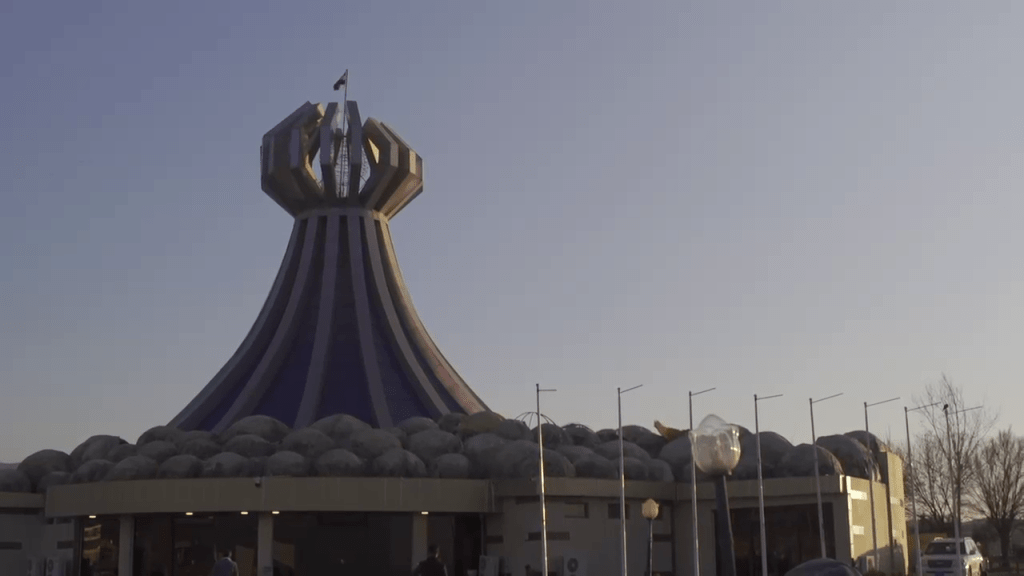 (Image: Halabja Memorial, Image sources: YA-Media Collective)
Around March 16 each year, thousands of people gather in Halabja. Politicians give speeches, wreaths are laid, and delegations from around the world visit the memorial sites. The 1988 poison gas attack is now considered one of the worst crimes against humanity of the 20th century and a symbol of Kurdish suffering.
But while the commemoration is ritualized, a central question often remains unanswered: What are the political consequences of this remembrance?
The anniversary of Halabja has long since become a fixture in international memory politics. But the very form this commemoration takes obscures an uncomfortable truth. Halabja is not a closed chapter of history. Rather, the attack stands within an authoritarian continuum—a political logic in which violence against Kurdish societies is repeatedly tolerated, downplayed, or geopolitically instrumentalized.
This continuum stretches from Saddam Hussein’s genocidal Anfal campaign to the complicity of Western states and on to current power constellations in the region. Halabja is therefore not only a historical crime scene but also a political touchstone: How is it remembered—and what are the actual consequences of this remembrance?
Halabja in the Context of the Anfal Campaign
The attack on Halabja was not an isolated event. Even if it was not truly part of the so-called Anfal campaign, with which the Iraqi Ba’ath regime attempted to systematically destroy the Kurdish population in 1988, both events bear the same hallmarks. Hundreds of thousands of people were displaced, deported to camps, or murdered in mass graves. Villages were attacked with heavy equipment and poison gas. Halabja marked a horrific culmination of this strategy: the attempted extermination of the Kurdish population through the massive use of chemical weapons against civilians.
To this day, survivors report various warning signs of the poison, such as the sweetish “apple smell” in the air—an indication of the nerve agents used. Within minutes, people lost their sight, suffocated, or died from severe burns to their skin and respiratory system. More than 5,000 people died directly in the attack on Halabja, and many more succumbed to the long-term effects.
Chemical weapons don’t just cause death—they create terror. Their impact is not only physical, but also psychological. They signal to an entire population that it is considered vulnerable to extermination.
The International Dimension of the Crime
But Halabja was not just the crime of a dictator. It was also embedded in the geopolitical power structures of the Cold War. During the Iran-Iraq War, Saddam Hussein was considered a strategic partner against Iran by many Western governments.
German companies supplied technology for chemical production plants, and Western companies exported so-called dual-use chemicals. Without this international infrastructure, the Iraqi chemical weapons program could not have existed in this form.
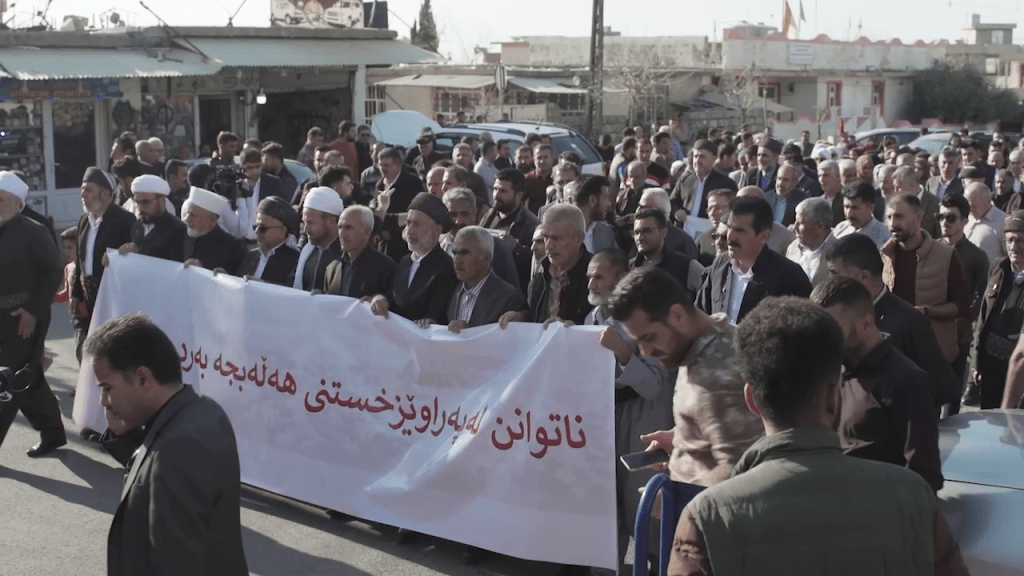 (Image: Commemoration in Halabja)
This historical responsibility was only inadequately addressed after the fall of the Ba’ath regime. Although the attack on Halabja was later officially recognized as genocide, and individual perpetrators were convicted, the structural role of international companies and political supporters remained largely unpunished. Halabja is remembered worldwide as a moral symbol – while the political and economic structures that enabled such crimes are rarely seriously questioned.
Organizations like WADI continue to work to examine these historical connections. In addition to projects supporting survivors of the Anfal genocide, WADI also documents the social and health consequences of chemical weapons attacks in Kurdish regions. Their work shows that the effects of such attacks often persist for generations – from chronic illnesses to genetic damage.
New actors, old logic
In 1999, Turkish armed forces used tear gas on Mount Cudi while attempting to clear guerrilla positions in remote mountainous areas. This was reported by IPPNW, the International Physicians for the Prevention of Nuclear War. Human rights organizations have repeatedly reported similar allegations in the decades since.
This example, along with the war in Syria, demonstrates that chemical weapons are no longer a relic of the Cold War. Since the beginning of the conflict, numerous chemical weapons attacks have been documented there. A report by the Syrian American Medical Society lists 161 confirmed chemical weapons attacks up to 2015 alone, resulting in the deaths of at least 1,491 people and injuries to over 14,000. The sarin attack on the Ghouta region near Damascus in August 2013 gained particular international notoriety. More than 1,300 people were killed within a few hours. Doctors reported typical symptoms of nerve gas poisoning: constricted pupils, respiratory paralysis, seizures, and foaming at the mouth.
In the following years, the nature of the attacks changed. While the use of sarin declined following international pressure, chlorine bombs were increasingly used. These were often dropped from helicopters over residential areas in improvised barrel bombs. Chlorine is a widely used industrial substance and is not fully regulated by international chemical weapons conventions. However, its use as a weapon is prohibited. Those affected report a pungent smell of cleaning agents, followed by severe coughing, shortness of breath, and a feeling of suffocation. Medical facilities in the affected regions were often completely overwhelmed. Many hospitals lacked sufficient protective clothing and appropriate medications. Doctors sometimes treated victims without protective masks, putting themselves at risk of poisoning.
The psychological consequences of such attacks are enormous. Many survivors report severe trauma even years later. Chemical weapons attacks not only destroy lives—they destroy trust in all forms of international protection mechanisms.
This creates a paradoxical situation: While monuments are being erected in Halabja for the victims of 1988 and there has been a resounding “never again,” addressing potential new chemical weapons crimes remains difficult. The memory of poison gas attacks is ritualized, while their political consequences are absent.
It is precisely in such situations that civil society organizations play a crucial role. While government investigations are often blocked or delayed, NGOs gather evidence, document witness statements, and support those affected. Organizations like WADI have been working in Kurdish regions of Iraq and Syria for years. In addition to projects focused on women’s rights and supporting survivors of violence, WADI also documents human rights violations and advocates for international awareness.
This form of civil society documentation is essential.
The Politics of Remembrance and Social Reality
The authoritarian continuum is also evident in the social reality of the survivors. Many people in Halabja continue to struggle with severe health consequences from the chemical attack. At the same time, medical care, social security, and economic prospects are often lacking. Protests against corruption, inadequate infrastructure, and the absence of compensation occur repeatedly. Demonstrators direct their criticism not only at the government in Baghdad but also at the Kurdish Regional Government.
Herein lies a central tension: Halabja is a key site of national remembrance—but for many residents, this remembrance remains inconsequential. Monuments are erected, anniversaries are organized, and international delegations are received. Yet the social and political demands of those affected often go unmet.
Remembrance thus risks becoming a symbolic practice that replaces political action.
Halabja as a Political Test Point
The anniversary of March 16th serves as a reminder each year of the horrors of 1988. However, a commemoration limited to mourning and moral outrage remains politically convenient. It allows governments and institutions to condemn the crime without addressing the structural conditions that enable such violence.
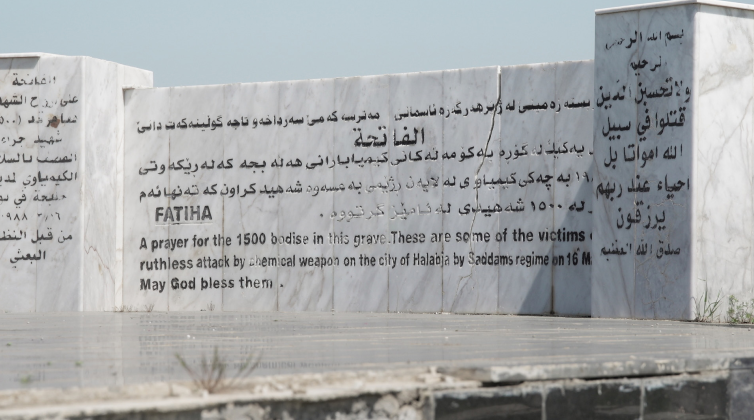 (Image: Mass grave in Halabja)
Halabja should therefore be remembered not only as a symbol of suffering, but also as a warning against an authoritarian continuum that persists to this day. The selective outrage of international politics, regional power alliances, and the instrumentalization of memory demonstrate that the political lessons of Halabja have still not been learned.
If remembrance is to be more than ritual mourning, it must lead to political action: to addressing international responsibility, to an independent investigation into new chemical weapons allegations, and to supporting those who continue to live with the consequences of the attack.
Until that happens, Halabja will remain not only a place of remembrance – but a mirror of the political present.
 Wadi
Wadi 
