Wadi’s two-year project has seen significant progress in raising awareness and supporting survivors of Female Genital Mutilation (FGM) in Rania and Halabja.
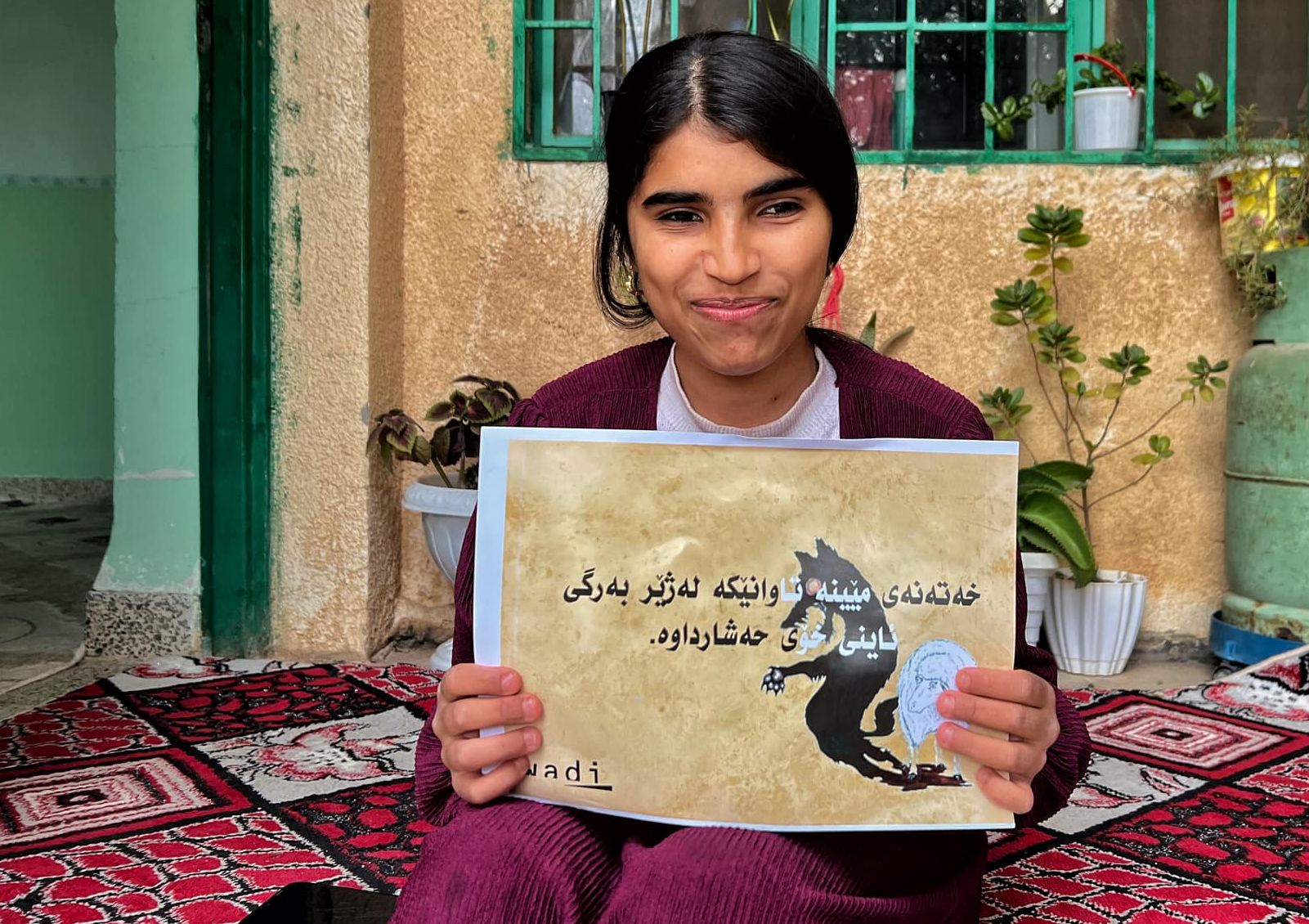
A village girl with a an anti-FGM poster
Wadi is happy to share the results of our 24-month project to combat Female Genital Mutilation (FGM) in Kurdistan, which has been implemented in close cooperation with our local partners from NWE and ADWI.
At the onset of the this two year project, which is a part of our long-term ongoing combat to end FGM in Kurdistan that started in 2005, Wadi had set concrete goals that our teams wanted to achieve:
- Focus on Both Prevention and Support: The project addressed the issue from two angles: raising awareness to prevent FGM in areas like Rania and Halabja, and expanding the “Living with FGM” program offering psychosocial support for survivors and coping mechanisms in areas with lower prevalence. Activities included seminars, self-help groups, sessions with medical professionals, and a best practices booklet on FGM.
- Shifting Cultural Norms: An essential short term and longterm aspect of the project was tackling the deep-rooted stereotypes and reasons that people continue to justify the practice of FGM. Interactive seminars addressed misconceptions like being seen as ‘unclean’ associated with un-cut women and the slowly differing views on female sexuality between generations. Building trust and fostering open discussions challenged the perception of FGM as a religious requirement, framing it as gender-based violence.
Through the this project hundreds of participants directly benefited from all the different aspects of the project, from increased awareness about the long-lasting harm of FGM, to increased information about their bodies and women’s health, or increased information and awareness about their legal rights as women and their fundamental human rights. Through media resonance and our teams working tirelessly once again FGM became a topic of open discussion within local communities, on the radio and TV programs. The amplification of the message of FGM has been a powerful tool, and is incredibly important in creating momentum for real social change.
K.H. 32, said, “I have an 11 years old daughter, I think she got her period but she doesn’t want to tell me, and I don’t say anything to not embarrass her. Every end of each month she and her sister get agitated and stressed so I guess it’s that. These leaflets about puberty are very good. I’ll give it to them”. (An excerpt on interviews with participants)
The project also brought OB-GYN doctors and women’s health nurses to remote villages where access to healthcare is complicated or very limited and increased engagement with healthcare providers on FGM-related issues.
The project also focused on meaningful network building and expanded pool of empowered actors committed to ending FGM. We were also able to heavily invest in capacity building through the training of Wadi team members and then trainings for engaged actors such as nurses, doctors, social workers and others who might have contact with FGM survivors or women contemplating continuing the practice on their young daughters.


This multiplicator approach has a lasting impact and is necessary for long-term change to be able to happen.
Z.A. a 35 year old women shared her thoughts on the shift in FGM practices after people knew more about the law banning it: “since we realized that FGM was illegal we stopped practicing it, I had a friend who was a nurse back in the two thousand and she told us that FGM is not a thing in our religion, I have even asked a Mullah myself and he confirmed it, and this was 15 years ago, since then, FGM was no longer practiced publicly in our village, even if someone did it secretly, they are afraid to say it in public because of the law”. (An excerpt on interviews with participants)
To share some highlights of the past two years:
Spreading the Word: We held seminars, self-help groups, and workshops with medical professionals. We also created a best practices booklet for providers and participated in multiple trainings to raise awareness and build capacity.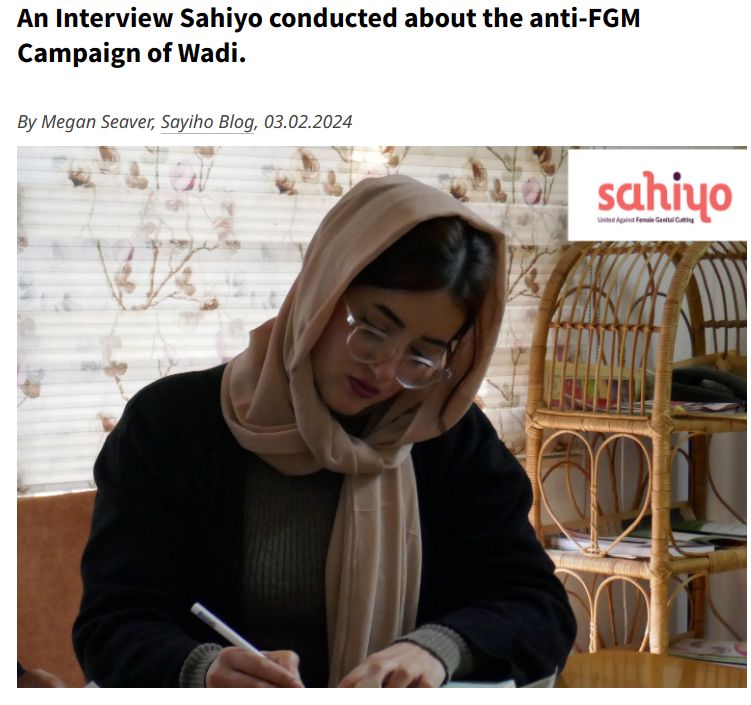
Working with Men: We held seminars with men to understanding the problems men face in society and in their local context, and worked with men to begin to create allies in young men for social change on FGM and womens rights.
Media Savvy: We worked with local media such as radio and TV to highlight the cause of FGM and the people working to end the practice this increased media coverage allowed Wadi to amplify the urgency of ending FGM.
Culturally Sensitive Approach: We developed targeted messages and seminars for different regions, recognizing the unique needs and cultures of each area. This is a key part of the Wadi approach, we work with people, we do not dictate to them how they should live their lives. Each area, village or community has its own needs and reasons for continuing the practice, our job is to help them find new ways to have a sense of community while leaving FGM in the past.
Building Bridges: We fostered collaboration with local medical professionals, NGOs, and community groups. We also facilitated knowledge sharing with other Middle Eastern experts working to end FGM. South to South cooperation was extremely valuable and this kind of knowledge sharing has been a key strength of Wadi’s approach.
Empowering Local Actors: We provided training (“Train the Trainers”) for midwives, OBGYNs, and others to equip them with the knowledge and tools to support women living with FGM.
Digital Resources: We created safe, culturally appropriate digital materials explaining women’s health issues for self-help groups.
Safe spaces & Support: We provided safe spaces with trained facilitators for affected women and men to participate in group therapy sessions.
This project has had an incredible Impact: FGM in Kurdistan is back on the map, people are engaging with the topic and there is a renewed energy to combat the practice and to put womens health and womens rights back on top as burning topic!
In this long fight to end FGM we know that intreset ebbs and flows, but we continue to push to drive the conversation forward and to push for positive change.
#EndFGM #Kurdistan #WomensHealth
We want to thank the Consulate General of the Kingdom of the Netherlands for their support of this project.
See also: Presentation: Wadi’s work to combat FGM in Iraqi-Kurdistan and other countries in the Middle East and the excerpts from our latest yearly activity report:
 Wadi
Wadi 
