
Our partners from ADWI held a roundtable discussions about FGM and domestic violence on 6. February.
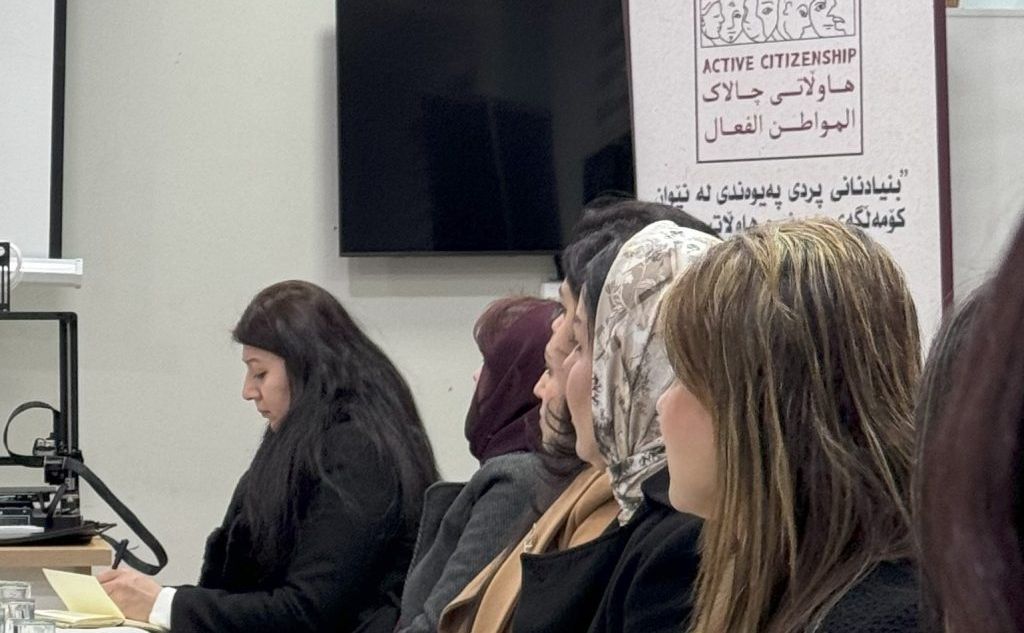
On February 6, 2025, in honor of the International Day of Zero Tolerance for Female Genital Mutilation the Awareness and Development for Women and Children in Iraq (ADWI) organized a roundtable discussion in the Ranya area to address the persistence of Female Genital Mutilation, despite its decline due to legal prohibitions and awareness campaigns. While FGM is no longer widely practiced in the Ranya area, our team has observed that it continues in secrecy. During our engagements with local women, it became evident that some individuals firmly believed in the practice. If given the opportunity and access to a willing midwife, they would proceed with mutilating their daughters. However, the enforcement of Law No. 8 of 2011 bans FGM in the Kurdistan Region has made it difficult to perform the practice openly.
The roundtable brought together 18 participants, including lawyers, medical specialists, teachers, and representatives from the Human Rights Department in Raparin. The session aimed to foster discussion on pressing issues related to child rights violations, including child marriage, child labor, and school dropout rates. The event was well attended and had a strong local media presence.

Child Marriage
The discussion began with an overview of human rights violations, particularly child marriage. Concerns were raised regarding the reformation of Iraq’s Personal Status Law, which now permits children as young as nine years old to be legally married. Participants highlighted that this change creates confusion and undermines the progress made by civil society organizations in combating early marriage in Kurdistan.
Luqman Haji Qadir, a representative from the Human Rights Department in Raparin, remarked:
“Girls today are raised to view marriage as an investment for material gain rather than as a foundation for building a family. Financial difficulties and a lack of awareness further fuel this mindset. Awareness campaigns must target all levels of society, from youth to the elderly, including religious leaders, who significantly influence these issues.”
The discussion also addressed the influence of tribal traditions, which continue to dictate marriage practices in some areas. Tribal leaders still hold power over marriage decisions, often disregarding legal frameworks.
Child Labor and School Dropout Rates
Another critical issue discussed was the increasing prevalence of child labor, largely driven by financial struggles and regional salary crises. One participant emphasized:
“Adults in this society are destroying children’s futures. Children are used for labor and begging across Kurdistan, with no adequate protection in place.”
The conversation also touched on school dropouts, as more children abandon education due to limited job prospects. With high unemployment rates, many youths feel that schooling does not guarantee financial stability, prompting them to seek work at an early age.
Female Genital Mutilation (FGM)
Following these discussions, the ADWI team introduced FGM as another form of violence against children. Initially, many participants believed that FGM was no longer practiced in Ranya and surrounding areas due to awareness efforts and legal restrictions. However, our team shared firsthand experiences revealing that FGM persists in secrecy, with some women still advocating for it. The roundtable participants acknowledged that such harmful traditions are often perpetuated by religious groups pushing specific agendas. They agreed that eliminating deeply rooted beliefs like FGM requires time, continuous awareness campaigns, and targeted interventions at all societal levels.
 Wadi
Wadi 
