
In January 2026, Equality Now, the Hurra Coalition, the Global Campaign for Equality in Family Law (GCEFL), and Asuda submitted a joint report to the UN Committee on the Elimination of Discrimination against Women (CEDAW). The submission sounds the alarm on sweeping changes to Iraq’s Personal Status Law, changes that deepen gender inequality, entrench sectarian discrimination, and roll back decades of hard-won legal protections for women and girls.
By Equality Now, 06.02.2026
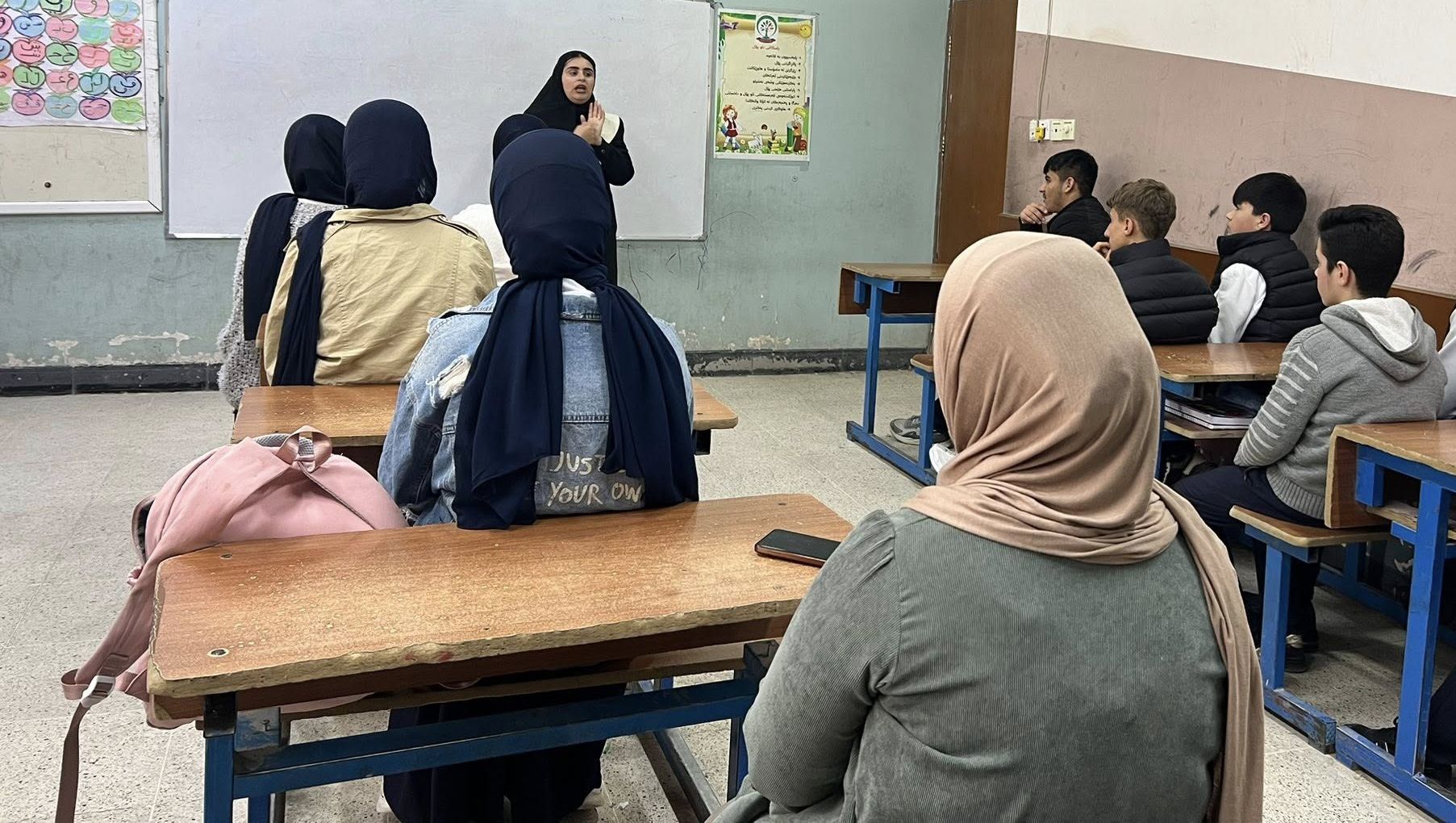
(Picture: School class in Northern Iraq, Source ADWI)
At the center of concern is Iraq’s continued reservation to Article 16 of CEDAW, which guarantees equality in marriage and family life. Iraq’s refusal to fully commit to this core provision has allowed discriminatory family laws to persist and, more recently, to expand.
From one law to many: Legal inequality by sect
For decades, Iraq’s Personal Status Law No. 188 of 1959 provided a unified framework governing marriage, divorce, custody, and inheritance. While imperfect, it applied to all Iraqis and offered baseline protections for women. That unity has now fractured.
In 2025, Parliament passed an amendment allowing personal status matters to be governed by sect-based jurisprudence, specifically recognizing Ja‘fari Shi’a doctrine. A parallel “Jurisprudential Code” was rushed through Parliament without debate, creating a separate legal regime covering every aspect of family life, from marriage contracts to custody and inheritance.
The result? Women’s rights now depend on their sect, their community, and the discretion of religious authorities. Two women living in the same city can face entirely different legal realities simply because of their religious affiliation. Equality before the law guaranteed under both Iraq’s Constitution and international law is effectively undermined.
Child marriage by another name
One of the most alarming consequences of the new framework is its impact on child marriage.
While Iraqi law nominally sets the minimum marriage age at 18 (with judicial exceptions at 15), the Ja‘fari code deliberately avoids specifying a minimum age. Instead, it refers to “puberty,” defined in Ja‘fari jurisprudence as nine lunar years for girls.
This omission is not accidental. It opens a legal loophole allowing courts to defer decisions to religious authorities, making child marriage not only possible, but legally defensible. In a country where tens of thousands of marriages already occur outside the courts, the risks are severe: early pregnancy, school dropout, poverty, and lifelong exposure to violence.
CEDAW has repeatedly urged Iraq to eliminate all exceptions to the minimum marriage age. The new amendment moves decisively in the opposite direction.
Marriage without equality
The amended law reinforces male authority within marriage. Women can lose their right to financial maintenance if they leave the marital home without permission, travel independently, or refuse sex, regardless of coercion or harm. Refusal of sexual relations can label a woman “disobedient,” stripping her of economic rights and legal remedies.
Divorce remains largely a unilateral male right. Under the new code, women’s ability to seek judicial separation is drastically restricted, often requiring approval from the highest religious authority. Compensation for arbitrary divorce, post-divorce housing, and inflation-adjusted dowries, once available under the unified law, are eliminated.
Custody without the child’s best interests
Under the new jurisprudential framework, mothers’ custody rights are reduced, in some cases ending at age seven. Custody automatically transfers to the father, without any assessment of his fitness or the child’s well-being. Remarriage by the mother results in immediate loss of custody, even if the second marriage later ends.
Critically, the “best interests of the child” standard is absent. Fathers retain sole legal guardianship, meaning mothers cannot make fundamental decisions about their children’s education, healthcare, or travel, even while they are the primary caregivers.
Inheritance, polygamy, and economic exclusion
The amendments introduce further economic discrimination. Wives are barred from inheriting real estate from their husbands, even if they have no home of their own. They may receive only cash equivalents of structures or crops, never the property itself.
Polygamy, while nominally regulated under existing law, is left largely unchecked under the new code. A husband who violates a contractual promise not to take another wife faces no legal consequence; the second marriage remains valid. These provisions entrench women’s economic insecurity across marriage, divorce, and widowhood.
Violence without accountability
The jurisprudential code fails to criminalize domestic violence or marital rape, treating sexual access as a marital obligation rather than a matter of consent. Women who resist abuse risk being punished through loss of maintenance or legal standing.
Meanwhile, Iraq’s Penal Code continues to provide reduced penalties for so-called “honor crimes,” reinforcing impunity. Female genital mutilation remains uncriminalized at the federal level. These gaps persist despite repeated recommendations from CEDAW and commitments under Iraq’s own national strategies.
What CEDAW must demand, and Iraq must deliver
This submission calls on the CEDAW Committee to press Iraq to:
- Withdraw its reservation to Article 16 of CEDAW
- Repeal sect-based amendments and adopt a unified, egalitarian family law
- Set 18 as the minimum marriage age without exceptions
- Guarantee equality in divorce, inheritance, custody, and nationality
- Criminalize domestic violence, marital rape, FGM, and abolish “honor crime” mitigations
Family law is not a private matter, it is the foundation of citizenship, dignity, and equality. Iraq’s current trajectory risks cementing discrimination for generations.
CEDAW’s review is a critical moment. The question now is whether Iraq will choose equality under the law, or continue to legislate inequality, one family at a time.
Read the full submission
Read our joint submission with the Hurra Coalition, the Global Campaign for Equality in Family Law (GCEFL), and Asuda, a women’s rights organisation in the Kurdistan Region of Iraq specializing in combating gender-based violence and harmful practices, submitted to the UN Committee on the Elimination of Discrimination against Women (CEDAW).
 Wadi
Wadi 
