
Our partner organization Jinda has invited different actors to create a recycling newtork in Iraqi-Kurdistan
By Aya Jalal, 04.05.2026
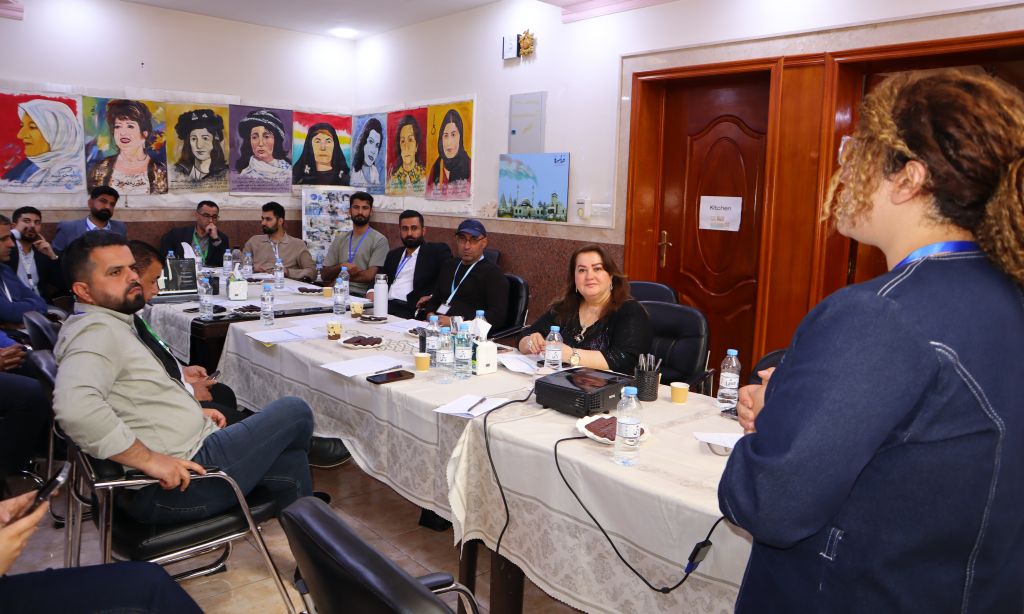
Jinda Organization has just hosted an important environmental network meeting with the participation of NGOs, stakeholders, private sector representatives, and government entities. The meeting lasted four and a half hours and included a lunch break. The purpose of the gathering was to strengthen cooperation among environmental actors and discuss the creation of a joint network for coordinated environmental action in the Kurdistan Region.
Jinda Organization opened the meeting with a presentation highlighting its environmental projects for this year. The team also introduced the recycling center, explaining its objectives and future plans to support waste management and recycling efforts.
VNG delivered a presentation about its previous environmental projects in the Kurdistan Region. They noted that many of these projects are now being managed by the government. VNG also shared information about their current contract with the government to build a facility for recycling plastic bags.
Stakeholder Contributions
A representative from the private sector working in plastic purchasing expressed readiness to buy collected plastic materials. This highlighted the importance of connecting NGOs with market actors to ensure the long-term sustainability of recycling initiatives.
Municipality representatives presented their existing recycling programs and future waste management plans. They emphasized the need for close collaboration with NGOs to improve community participation, waste collection systems, and recycling activities.
The Directorate of Environment also confirmed its willingness to cooperate, especially in supporting public awareness campaigns during picnic seasons to encourage responsible waste disposal and environmental protection.
Participants from Halabja, including Shnyar and Sabah, shared valuable experiences from their environmental work, presenting successful community-based approaches, lessons learned, and key challenges.
Key Outcome
All participants agreed on the importance of establishing a collaborative network named Kurdistan Waste Action Network. The network will aim to unify efforts, exchange knowledge, and improve coordination among NGOs, private sector actors, stakeholders, and government institutions.
- Develop the structure and coordination mechanism for the network
- Appoint three focal points to lead coordination: Jinda Organization, YAK Dar Organization, and the University of Duhok represented by Mr. Basher
- Organize follow-up meetings to define joint priorities and future activities
Closing
The meeting concluded with a strong shared commitment from all participants to strengthen partnerships and work together toward a cleaner environment and improved sustainability across the region.


