
In a small ceremony the Eco friendly house in Halabja was inaugurated. It is an example how to save energy and water.
By Shatoo Kamaran, 02.07.2026
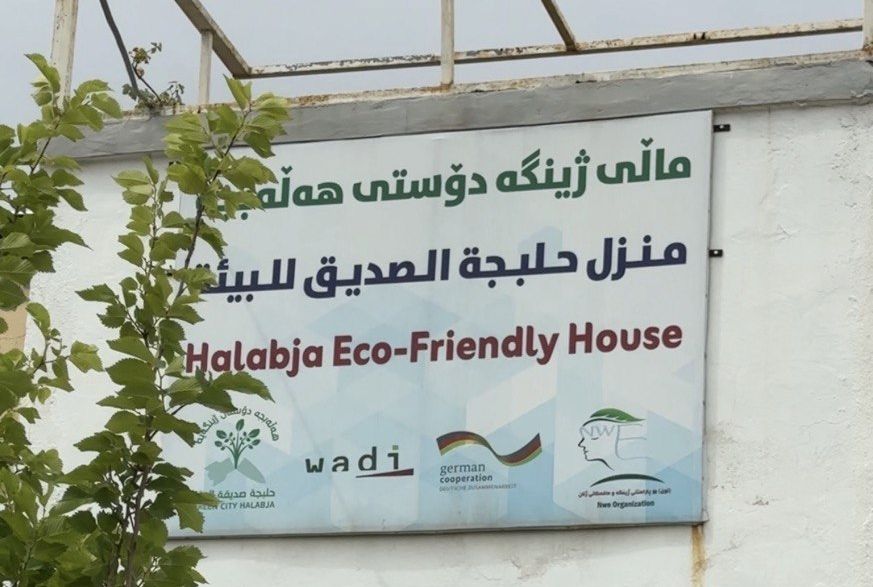
(Pictures by Wadi and Nwe)
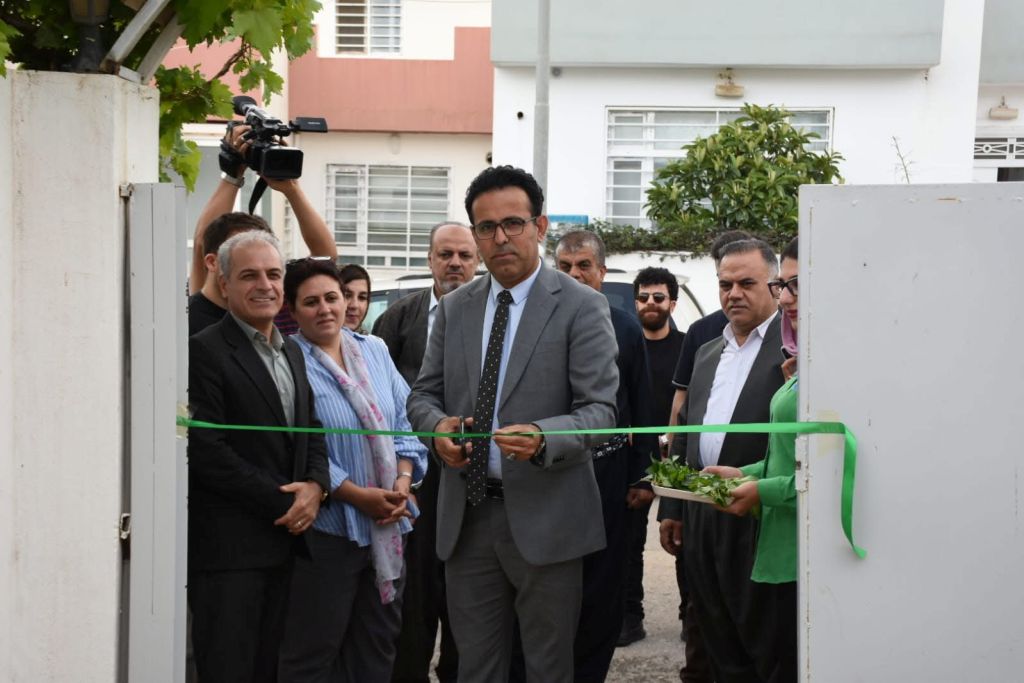
On the 21st of May, 2026, Halabja’s ecofriendly model house, which was created by the Wadi and Nwe organization supported by the BMZ, opened its doors to the public with the presence of the local community, civil society organizations, and government officials.
Almost three years ago, in September 2023, when we first stumbled upon this house, well not entirely stumbled; it was a very precise search for the most basic and most common house one could find in Halabja, we had limited knowledge on what we were going to do afterwards, because this was a new concept for all of us.
But we knew exactly what we wanted to achieve at the end, an efficient, ecofriendly house to save the most energy and wastes the least resources.
On a warm sunny day during the last days of May, the model house cut the ribbon and welcomed the local community.
Right after cutting the ribbons, the guests entered the front yard, absorbing everything around them.
Banaz stood on the stairs and caught everyone’s attention.
“Welcome, everyone. Welcome to our ecofriendly home. We are gathered here today to celebrate the opening of our model house, to show you exactly what we did and how we did it,” said Banaz, project manager from Nwe organization.
The changes start from the minute you enter the house; you can see the window shutters, canopy, and insulated walls, which all serve a crucial purpose.
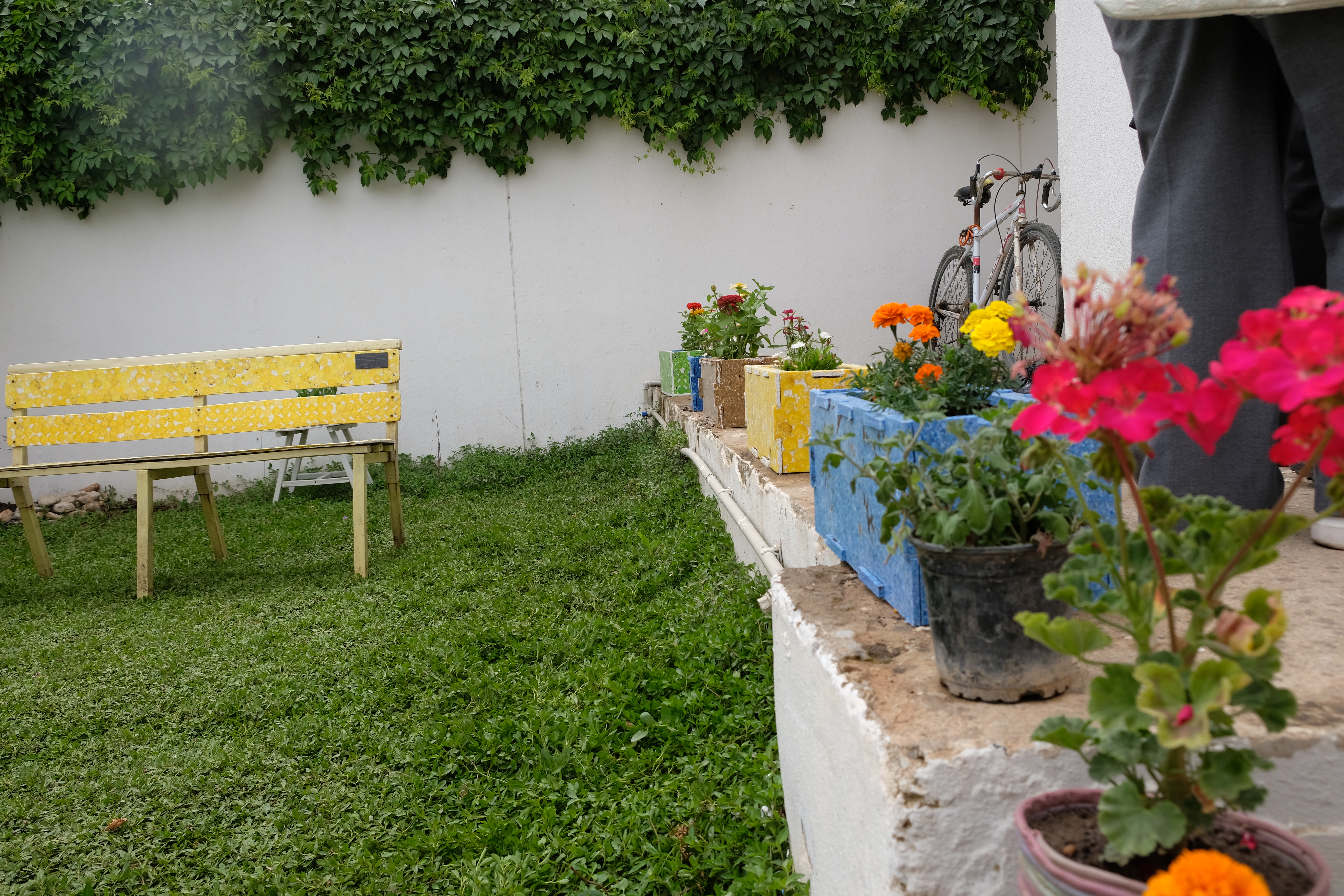
The garden is planted with local plants so that it requires less water and no fertilizers. The planters are made from recycled plastic made by the local recycling center in Halabja.
“Everything you see here is thought through and intentional; the plants are picked in a way that supports biodiversity! It attracted beneficial insects, which directly wards off the harmful ones.”
The guests were introduced to all the changes made in the yard that supports the ecology and saves water and electricity.
“Now let’s enter our humble home,” said Banaz. Later the guests gathered in the dedicated “Training Room” of the model house while watching presentation slides regarding the changes made in the model house and the process that led to that.
The guests shared their opinions and additions we could do to further improve the project.
But the important question everyone kept asking was
“Where are the vents?”
“There are no vents! No air conditioner is needed; the house is completely insulated.”
On a sunny day in May, temperatures outside can reach 30°C, which definitely requires air-conditioning in a non-insulated house.
But not in a model house, where the exterior and interior walls are insulated and the rooftop is covered with a garden.
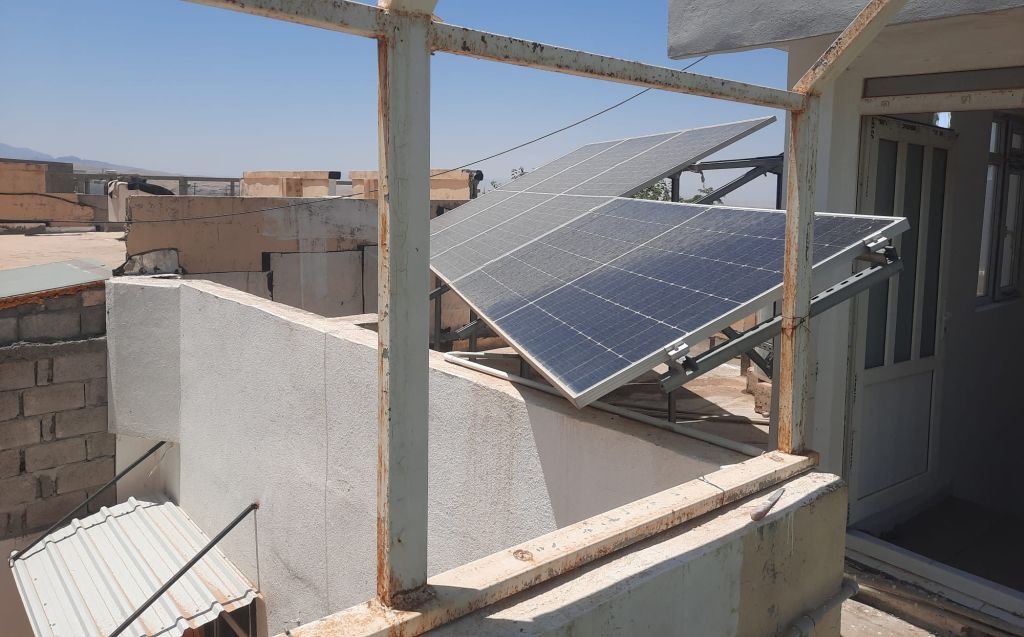
After taking a tour inside the house, the guests moved to the rooftop to see the garden and the solar panels that provide enough energy to run the house.
“This garden not only provides a space for greenery but also prevents the house from absorbing heat in summer. And it’s watered through our gray water system that runs through the house!” said Banaz.
After the rooftop garden, the guests then moved to the kitchen and formed a group discussion while sipping tea.
“I truly applaud you for your work; this is a great step. Now as the Halabja environment office, we have a physical example to show people how they can adapt their homes to the environment. I have some points and suggestions we can work on later further,” said Sarhang Abdulrahman, Halabja’s environmental office manager.
Constructed entirely by local companies on an existing house in Halabja, we wanted to show that it’s possible to make great change without having to completely build a new house or spend millions of dollars on imported materials, and that’s where the Model House came to be.
This project is supported by the German Federal Ministry for Development Cooperation