
Together with our partner organization Jinda, we will implement a novel agricultural project in Khabarto, an IDP camp for survivors of the genocide by IS.
By Dominik Metzger, 25.06.2026
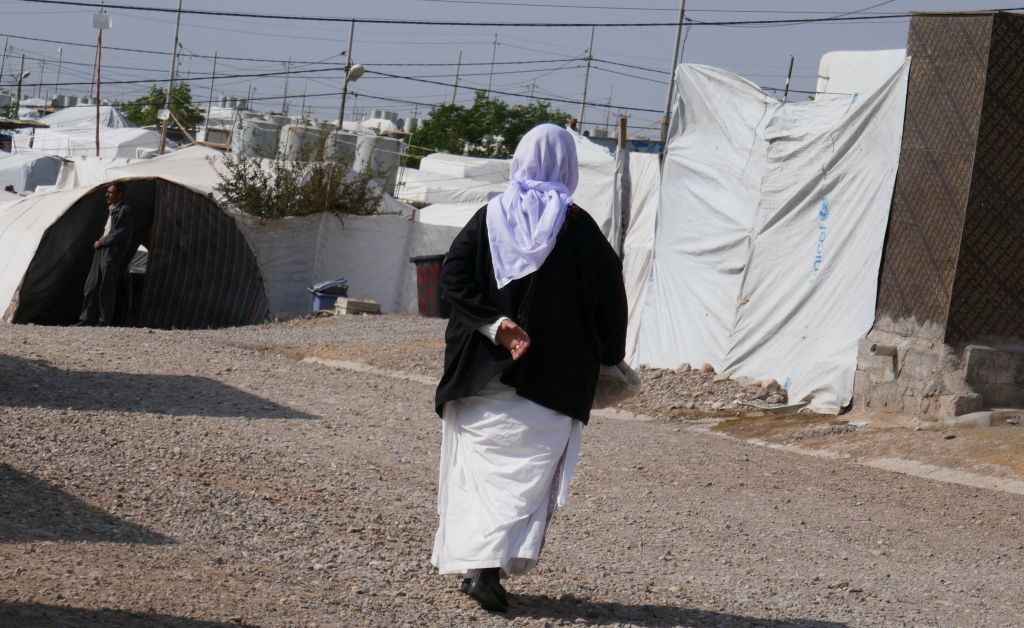
(Woman in Kabartoo Camp, Source: Wadi e. V.)
Since 2014, thousands of Yazidi families have been living in Kabarto Camp in Dohuk Governorate — displaced following the IS attacks on their home region of Sinjar. For many, returning is not a realistic option: the security situation in Sinjar remains unstable and the infrastructure has been destroyed. The camps have long since ceased to be a temporary arrangement, and daily life there is defined by restricted freedom of movement, a lack of income opportunities and little prospect for the future — particularly for women. Over 70 percent of Yazidi women in the camps of Dohuk Governorate are unemployed despite their willingness to work. Only 18 percent have access to vocational training or income support.
This year, together with our local partner Jinda and with funding from the German Committee of the World Day of Prayer (WWDP), we are implementing a project designed to address exactly this situation. At its centre is a cultivation method that has so far barely gained a foothold in the region: hydroponic farming. This is the growing of vegetables without soil, in which nutrients are delivered directly to the plant roots through water. The method requires little space, little water and no agricultural land — making it particularly well suited to the conditions of a camp.
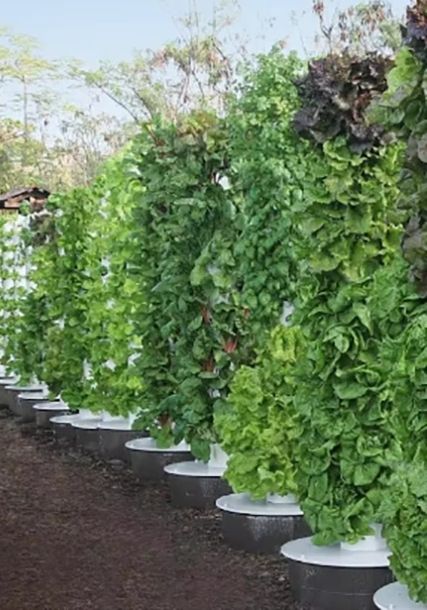
In the first months, we are developing prototypes for hydroponic towers together with the Faculty of Agriculture at the University of Dohuk, using locally available, affordable materials. What works is determined not by the laboratory but by the everyday realities of the participants: Which vegetables are needed? What suits the conditions on the ground? Following this, 30 women will be trained in two groups — in how to operate and maintain the systems and in basic business skills. Each trained woman will then receive her own hydroponic tower to grow vegetables at home: for her own household and for sale. At the same time, craftsmen from the camp are learning how to build the towers so that women have local technical support whenever they need it.
Throughout the entire project period, regular awareness seminars take place in the camp — covering sustainable farming, climate change, economic self-sufficiency, gender equality and the question of how women and men can share responsibility for food and household together. For young people, there are dedicated sessions that encourage entrepreneurial thinking and motivate them to develop their own small initiatives.
By the end of the project, 30 women will be independently producing fresh vegetables and will have gained a measure of economic independence in the process. The Faculty of Agriculture will provide academic support throughout and will remain available as a point of contact after the project ends. The construction plans for the towers, the knowledge built up and the network within the community are intended to ensure that the model continues beyond the project period and can be transferred to other camps.
This project is supported by: