
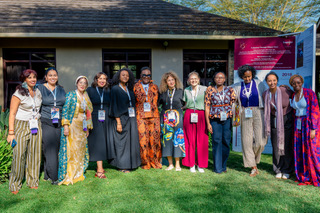
In September the Justice for Girls Convening and Festival took place in Kenya, bringing together activists, survivors, policymakers, government officials, funders, and movement leaders committed to ending Female Genital Mutilation/Cutting (FGM/C) and Child, Early, and Forced Marriage (CEFM) within a generation. Wadi and our partner ADWI represented the Stop FGM Mideast Campaign.
By Isis Eligbali, 18.10.2026
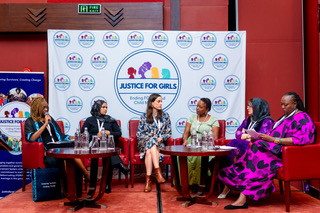
(Pictures by Justice for Girls)
More than a convening, the festival served as a dynamic opportunity to unite around a shared ambition: turning the knowledge, experiences, and leadership of girls and survivors into direct action. It arrived at a pivotal moment for the women’s and girls’ rights movement—a time to celebrate hard-won progress while confronting persistent inequalities, implementation gaps, and growing opposition to gender equality worldwide.
Bakhan Jamal, Director of partner organisation ADWI, and Isis Elgibali, Project Manager at Wadi, had the opportunity to travel to Kenya to participate, reflect on the practical tools and advocacy required to push the movement forward, and share their hopes for the future.
Setting the Global Context: Highlighting Realities in the Middle East
The festival opened on September 2nd with regional presentations detailing the current state of FGM/C and child marriage to establish a global baseline for all participants. Wadi and the STOP FGM Middle East Campaign were honored to present the complex and often incomplete picture of the region.
While FGM/C and child marriage are daily realities for tens of thousands of girls, women, and families across the Middle East, a sweeping glance across the region often presents a comforting illusion of progress. Official statistics tell one story, but daily life presents a far harsher reality. There is a common, comfortable assumption that 18 is the standard legal age for marriage across the board, or that FGM/C is confined to a few specific areas like Egypt or Iraqi Kurdistan. The uncomfortable reality is that we are witnessing a regional crisis obscured by state silence, legal carve-outs, and incomplete data.
The Kenya convening offered a valuable opportunity for Wadi to deepen its integration within the global movement against FGM/C while strengthening ties in our budding partnership with Orchid Project.
Legal protections across the region are inconsistent and often have loopholes. Only Kuwait and the United Arab Emirates prohibit all marriage under the age of 18 without exception. Meanwhile, countries such as Iran, central Iraq, and Lebanon explicitly permit child marriage.
Iraq serves as a prime example of this complex dynamic. The 2025 Personal Status Law amendment in Baghdad lowered the federal marriage age from 18 to 9, placing marriage laws under sectarian courts. Just a short drive away, the Kurdistan Regional Government currently maintains an age limit of 18, yet faces intense political pressure to adopt the federal rule. Today, no legal mechanism prevents someone from driving a few hours across regional borders to marry a child and return. And the same goes for FGM, Iraqi Kurdistan has a law banning the practice (Law No. 8 of 2011) but their is no federal law in Baghdad. Again their is no mechanism to stop someone from driving into one region and changing their little girl’s life forever.
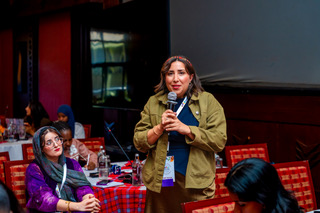
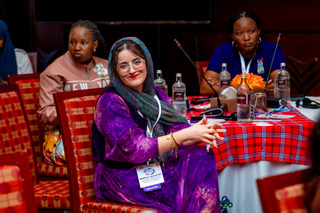
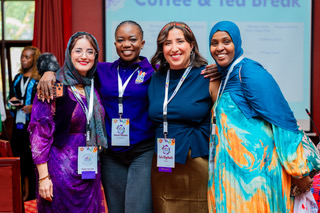
Everywhere we look—from untracked FGM/C practices in Oman’s Dhofar governorate to FGM and Child Marraige in coastal Yemen, or unrecorded ‘urfi’ marriages in Egypt—state silence and legal loopholes shield perpetrators from accountability.
Yet, progress is possible when targeted community action takes root. Through the STOP FGM Kurdistan campaign, Wadi proved that deep-seated social norms can be changed. Over a single generation, we significantly reduced FGM rates across Iraqi Kurdistan, declaring two entire regions FGM-free in the past year alone—an approach recognized by Human Rights Watch as a model for lasting change.
“Wherever there are whispers of FGM/C, we need to come together as a global community and put pressure on governments to allow independent research to be conducted in a way that does not traumatize communities.”
During the event, Wadi took the opportunity to announce the revitalization of the STOP FGM Middle East Campaign in cooperation with ADWI and Orchid Project. We invited attendees, including institutional representatives from entities like UNICEF and UNFPA, as well as donors, and other networks, like the Asia Network to END FGM to connect with us during the convening to build global and regional awareness around this vital initiative.
Insights from the Panels: Community Solutions and Regional Perspectives
On September 3rd, Bakhan Jamal, Director of ADWI, participated in a panel discussion where she shared key lessons from Garmyan and Ranya. She illustrated how sustained local engagement helped dramatically reduce FGM in one area, while interruptions in prevention and monitoring in another led to new cases emerging in another. She stressed that FGM often remains hidden within families and emphasized that declaring an area “FGM-free” must always be accompanied by continuous prevention, long-term monitoring, and sustained support for survivors.
The convening also provided a valuable platform to connect with activists and organizations from Southeast Asia and other regions facing similar challenges and similar religious contexts. This allowed participants to exchange practical experiences, learn from one another, and strengthen cross-movement connections—an opportunity that remains relatively rare when working on sensitive issues such as FGM/C and child marriage.
Together, Isis Elgibali and Bakhan Jamal shared a crucial message with convening participants regarding the future of field research:
“Wherever there are whispers of FGM/C, we need to come together as a global community and put pressure on governments to allow independent research to be conducted in a way that does not traumatize communities. We need to build meaningful, educational, and survivor-centered approaches to end this harmful practice where it is happening.”
Addressing the wider global climate, Isis Elgibali noted:
“Even though we currently face a global anti-rights and anti-women movement, we cannot allow Western discourses to dominate Middle Eastern, Asian, or African realities within this movement. We need to take steps to ensure that FGM/C, child marriage, and gender-based violence remain top-priority issues, while ensuring that each country is equipped to respond in its own context-specific way.”
She added:
“Paradoxically, as a global community, we need to support highly localized approaches to counter anti-rights narratives. Local responses that emerge from within communities are far more meaningful, impactful, and authoritative than broader, generalized messages. That is not to say we cannot support local actors as an international network, but we must allow each community to find an organic way to combat anti-rights rhetoric within their context, rather than exporting a single ‘global’ narrative.”
Building Strategic Alliances: The Journey with Orchid Project
The convening represented an exciting second chapter in the collaborative journey between Orchid Project and Wadi, which first began in the lead-up to the Women Deliver 2026 conference in Melbourne, Australia. Recognizing a strong alignment in goals, Orchid Project originally reached out to Wadi to propose a joint initiative. Combining Orchid Project’s global reach with Wadi’s extensive operational expertise in Northern Iraq—and our role as co-founders of the original Stop FGM Middle East Campaign in 2013—created an ideal foundation to address the urgent need for action on FGM/C across the region.
On April 26, 2026, this partnership officially launched in Melbourne, where Orchid Project hosted an all-day pre-conference event titled “United for Action: Global Solidarity to End FGM/C.” During that gathering, representatives engaged with experts, networks, and institutions to challenge widespread misconceptions and highlight evidence-based solutions for regions frequently overlooked in global discussions. Wadi contributed insights from over 25 years of field experience leading successful programs that lowered FGM rates in Iraqi Kurdistan while operating within complex cultural and religious landscapes.
During those earlier discussions, Wadi addressed the ongoing struggle to secure funding when institutional donors do not explicitly prioritize the Middle East and Asia, while Orchid Project highlighted critical global data gaps and strategies to address them. Small activist and medical studies across several Middle Eastern countries point to an urgent need for research, advocacy, and high-level political backing, yet smaller NGOs and civil society organizations often cannot access government-level support on their own.
Emphasizing the necessity of international solidarity, Wadi representative Isis Elgibali spoke on a panel at the “United for Action” event alongside Professor Angela Dawson and Sean Callaghan (Chief Research Officer at Orchid Project), in a session moderated by Warda Warsame (End FGM Canada Network Coordinator). These interactions built strong trust and established a solid working foundation between Wadi and Orchid Project.
For a grassroots organization like Wadi, having direct, peer-to-peer access to institutional leaders was immensely valuable.
As mentioned above Wadi and the Stop FGM Middle East Campaign were represented at the Justice for Girls 2026 convening in Kenya with generous support from Orchid Project and Sahiyo.
Expanding Impact, Networks, and Future Horizons
The Kenya convening offered a valuable opportunity for Wadi to deepen its integration within the global movement against FGM/C while strengthening ties in our budding partnership with Orchid Project. Having previously collaborated on research and publications, the gathering allowed both organizations to continue building their working relationship around the newly revitalized Stop FGM Middle East Campaign. Formally announcing the campaign at the convening significantly expanded the project’s reach and impact within the broader international network.
The event provided a dedicated platform for Wadi to address the lack of visibility surrounding FGM/C in the Middle East and to share up-to-date insights on both FGM/C and child marriage across the region. With an emphasis on network-building through shared visions and practical lessons learned, the convening enabled Wadi to expand its organizational and geographical footprint. It successfully bridged the gap between smaller grassroots groups in Africa and Asia and major international institutions.
For a grassroots organization like Wadi, having direct, peer-to-peer access to institutional leaders was immensely valuable. These encounters have already sparked meaningful dialogues with regional offices regarding FGM/C and child marriage in the Middle East—outcomes that would have been difficult to achieve without the direct connections established in Kenya.
Additionally, the gathering served as a productive space to exchange practical ideas, discuss shared operational challenges, and explore future collaborations. Through connections made at the event, Wadi is now establishing a long-term knowledge exchange with a local Kenyan organization, EmpowerNet. Together, we are collaborating on shared priorities, such as engaging men and boys in the movement to end FGM/C and expanding educational and economic opportunities for young women and girls in remote villages—reflecting the reality that many challenges faced in Northern Iraq closely mirror those in rural Kenya.


